Capsule Wardrobe for Women: Build One From Your Closet
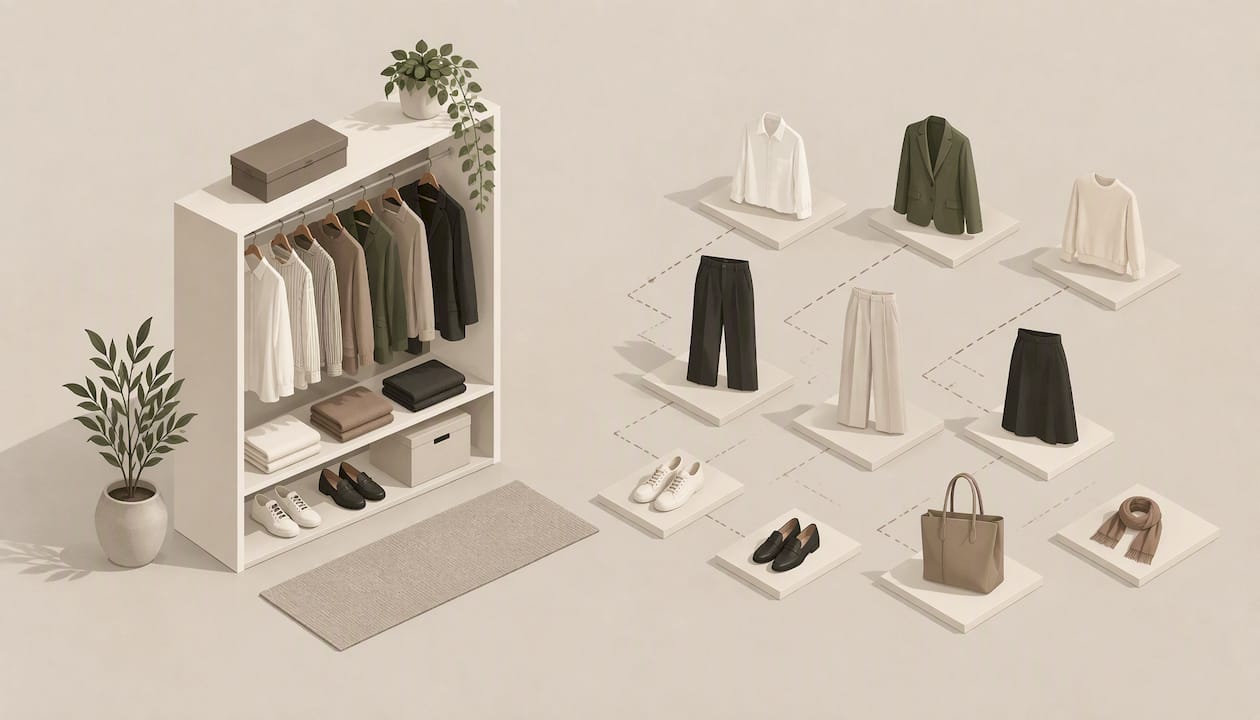
A capsule wardrobe is a small, deliberately chosen set of clothes that all work together, so you can build many outfits from few pieces. Most women do not need to buy a new one. You build it by sorting what you own, finding the pieces that connect, and filling only the gaps that remain. This guide gives you the numbers, the steps, a checklist you can copy, and the mistakes we see most often.
TL;DR
- A capsule is defined by compatibility, not by a magic number. Pieces should mix with at least two or three others.
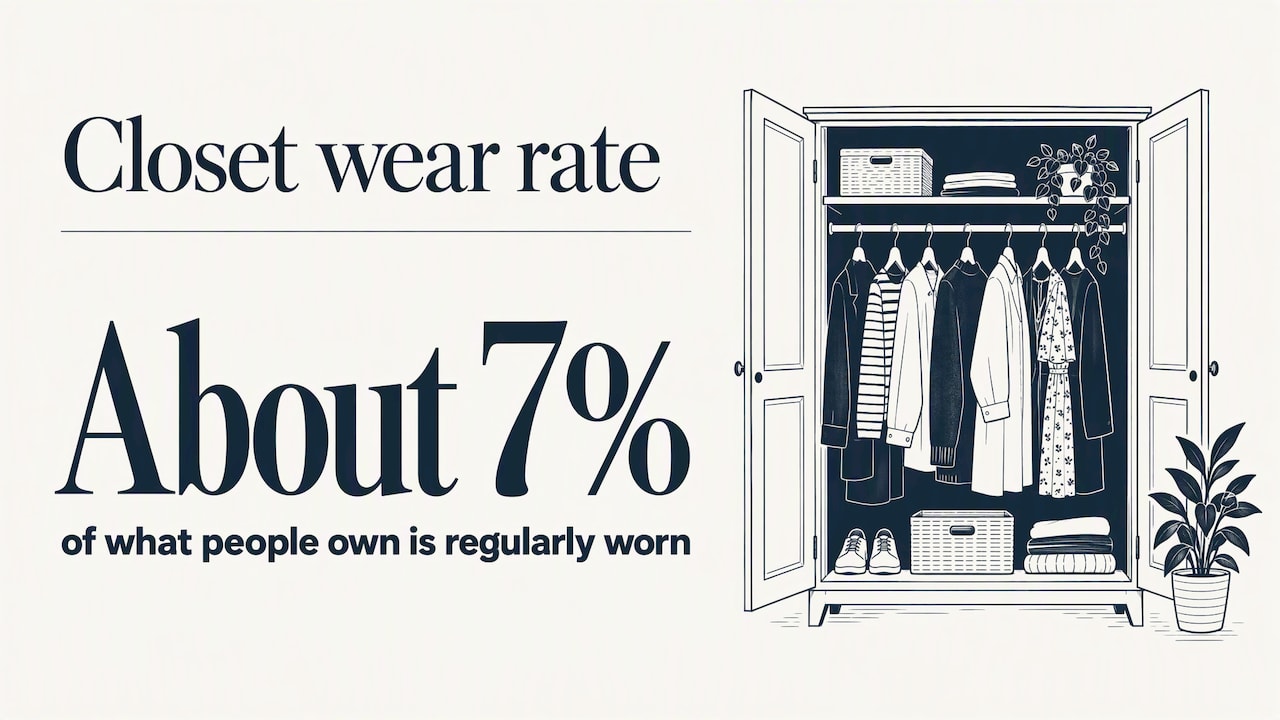
- Start by shopping your own closet. Research suggests people regularly wear only about 7% of their wardrobe.
- A workable range is roughly 30 to 37 items per season, per fashion experts cited by freundin. Smaller and larger capsules both work.
- Buy only to close gaps, using a short written list, not a mood.
- Test the capsule with a week of planned outfits before you commit.
Table of Contents
- What a capsule wardrobe really is
- Why most closets fail the capsule test
- How many pieces do you need?
- Build your capsule in seven steps
- A capsule wardrobe checklist for women
- What a working woman’s capsule looks like
- Make it work in real life
- Common mistakes
- Our perspective
- Where Style To Cart fits in
- FAQ
- Sources
What a capsule wardrobe really is
The idea is simple. You keep a limited group of pieces in a coordinated palette, and every piece earns its place by working with others. Fewer clothes is a side effect. The goal is that getting dressed takes less thought.
That is also why capsules and minimalism are not the same thing. A minimalist capsule wardrobe may hold 15 items. A working woman’s capsule that covers an office, weekends and a few evenings may hold 40. Both are capsules if every piece connects.
Academic work describes the minimalist version as reducing a wardrobe to a small set of quality items that coordinate. Notice the last two words. Coordination is the point.
Why most closets fail the capsule test
The usual complaint, “I have a full closet and nothing to wear,” is not a shortage of clothes. A study of home wardrobes found people regularly wear about 7% of what they own, and that the real hurdle is pieces that do not connect to each other.
There is a shopping side to it too. Research on frequent female shoppers describes transient satisfaction: the lift from a purchase fades fast when the item has no link to what is already in the closet. A new top that matches nothing gives you a mood boost for a day and a hanger problem for a year.
If this sounds like you, our piece on why a full closet still feels empty goes deeper on the causes.
How many pieces do you need?
You will see several formulas online. None is a rule. Treat them as starting sizes.
| Approach | What it means | Best for |
|---|---|---|
| Project 333 | 33 items, including accessories and shoes, worn for 3 months (study) | A reset, or anyone who likes a clear challenge |
| Season-sized capsule | About 30 to 37 garments per season, according to experts quoted by freundin | Daily wear with some variety |
| Module method | A repeating block, for example 2 pairs of pants, 3 tops, 1 outer layer and 1 pair of shoes | Adding to a capsule in small, safe steps |
| Mini capsule | 10 to 15 pieces for one purpose, such as work or travel | Busy weeks, trips, a specific job |
Pick by lifestyle, not by ambition. If you dress for a client-facing job five days a week, 15 pieces will leave you repeating outfits you are tired of. If you work from home and wear the same three outfits anyway, 15 may feel generous.
One caution on Project 333: research on minimalist fashion challenges finds they can encourage reuse and repair and curb overconsumption, but many people join for personal benefits like saving time and money. That is a fine reason. Just do not treat a number as a pass or fail.
Build your capsule in seven steps
This is the order we recommend. Skipping to step six, the shopping, is the most common mistake.
- Define your actual week. Write down how many days you spend at work, at home, at events, and exercising. A capsule built for a life you do not live will sit unworn.
- Pull everything out, by category. Tops together, pants together, outer layers together. Seeing 14 black tees at once is useful information.
- Keep what you wear and what fits today. Not what fit in 2019, and not what you will wear “when the occasion comes up.” Put maybes in a box, dated, out of sight.
- Choose a color base. Pick two or three neutrals you wear well, plus one or two accent colors. If you want help turning that into real outfits, see these outfit color combinations you can actually wear.
- Test connections. For each piece, ask whether it works with at least three others. Pieces that connect to one or none are your problem items.
- List the gaps, then shop. Gaps are specific: a mid-weight layer in a neutral, a pair of shoes that works with trousers and dresses. Write them before you open a store tab. A clothing wish list keeps that list honest.
- Run a one-week trial. Plan five outfits from the capsule alone. Where you get stuck is where the capsule has a hole.
A capsule wardrobe checklist for women
Use this as a template, then adjust to your climate and job. Counts are starting points, and you may already own most of it.
Tops (6 to 10)
- 2 to 3 easy tees or tanks in neutrals
- 2 to 3 blouses or button-ups, one in a pattern or color you love
- 2 to 3 knits: a fine-gauge sweater, a cardigan, and one heavier knit
Bottoms (4 to 6)
- 1 pair of well-fitting dark jeans
- 1 to 2 pairs of trousers, one dressier
- 1 skirt or pair of shorts, depending on how you dress
Dresses and one-pieces (1 to 3)
- 1 dress that works for both office and dinner
- Optional: a casual dress for weekends
Layers (2 to 4)
- 1 blazer or tailored jacket
- 1 coat suited to your coldest weeks
- 1 casual jacket or trench
Shoes (3 to 4)
- A flat or loafer, a comfortable sneaker, a heel or dressier boot, a seasonal option
Accessories
- A bag that fits your daily load, a belt, a scarf, and a few pieces of jewelry you wear without thinking
Vogue’s capsule guide builds around six non-negotiables, including shirting, trousers, classic denim and basic tees. That matches our experience: when the staples fit well, everything else gets easier.
What a working woman’s capsule looks like
Take a woman with a hybrid job: three office days, two at home, one dinner out a week. A season capsule of about 32 pieces might look like this: 8 tops, 5 bottoms, 2 dresses, 4 layers, 4 pairs of shoes, and the rest in bags, belts and scarves.
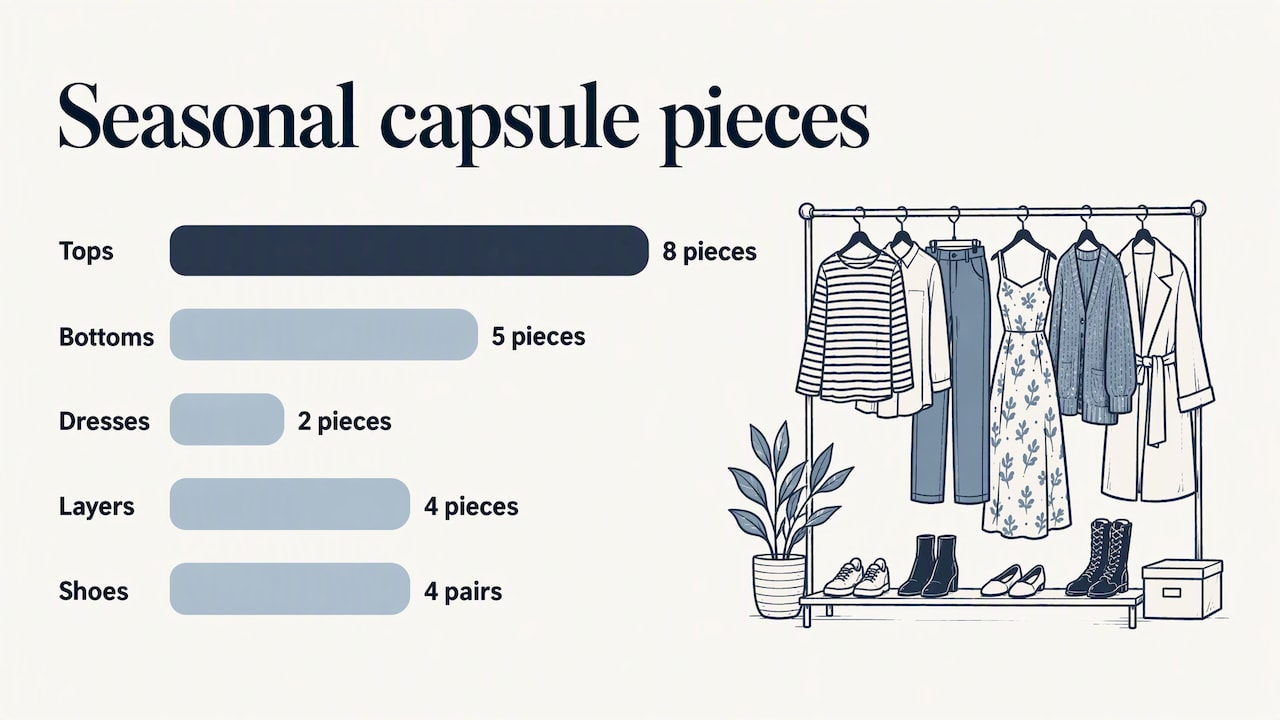
The office days draw from a trouser-and-blouse core. Home days use the denim and knits. The dinner uses the dress, a blazer from the office days, and the dressier shoes. Nothing was bought for one occasion only.
That overlap is the real measure. If you want to see how a single outfit can stretch from desk to evening, here is a day-to-night styling formula. For the office specifically, our five-minute work wardrobe method and a guide to meeting outfits show how to get ready in a few minutes.
Make it work in real life
Plan outfits before the week starts
A capsule does not remove decisions on its own. It makes them cheaper. Choosing five outfits on Sunday, from a closet that all works together, takes minutes. We lay out a simple routine in weekly outfit planning.
Use formulas instead of inspiration
Most people stall at “what goes with what.” A formula answers it: a type of top, a type of bottom, a layer, a shoe. Our outfit formulas give you 12 looks to copy from the clothes you already have.
Plan for your body and your size
A capsule only works if it fits. Sizing, fabric stretch and proportion matter more as you add pieces. If you wear plus sizes, see how to build a plus size capsule wardrobe that fits and works.
Rotate by season, not by trend
Store out-of-season pieces in a box, labeled. Swap every three months or so, which is the same rhythm Project 333 uses. Trends can add one or two accent pieces a season. They should not rebuild the whole capsule.
Common mistakes
- Buying a capsule from a list. Online lists describe someone else’s life. Use them as prompts, not shopping orders.
- Going all neutral when you do not wear neutrals. If beige washes you out, do not build around it. Start from colors you already reach for.
- Chasing a number. Thirty-three is a tool, not a virtue.
- Throwing out everything at once. Box it first. If you do not open the box in three months, you have your answer.
- Ignoring the shoes and layers. Pieces that finish outfits are often what make the capsule function.
Our perspective
We have spent more than 20 years styling women’s wardrobes, and the pattern is steady. The woman who says she needs a capsule rarely needs more clothes. She needs to see what she has in relation to everything else she has.
In personal consultations, the breakthrough usually comes in the first hour, when we lay out the closet by category and begin pairing. Pieces she had written off turn out to work with three or four others. Pieces she loved turn out to have no partner at all. That second group is where money has been leaking.
That is why we built Style To Cart. We took what happens in a consultation, assessing the closet, spotting gaps, finding new ways to wear what you own, and turned it into software that more women can use. Wendy’s background in education shapes how we do it: we want you to understand why an outfit works, so you can repeat it without us.
Our advice on capsules is the same as it was in person. Do not start with a number or a shopping trip. Start with an honest inventory, a clear picture of your week, and a short list of real gaps.
— Wendy
Where Style To Cart fits in
Doing the inventory by hand works, but it is slow, and it is hard to keep track of what pairs with what. Style To Cart lets you assess your closet virtually, organize it, spot gaps, plan outfits and shop strategically from the result. If you want a capsule built from what you already own, take a look at Style To Cart and see how it works. You can also read how Wendy moved from stylist to software founder, and more about what 20 years of styling taught her.
FAQ
What should a woman have in a capsule wardrobe?
The core is versatile staples: tees, a few blouses, knits, well-fitting jeans and trousers, a blazer, a coat, a dress, and three or four pairs of shoes. The exact mix depends on your job and climate. Anything that connects with at least three other pieces is a good candidate.
What is the 3-3-3 rule for a wardrobe?
There are several versions online, and no official one. A common reading is three tops, three bottoms and three shoes or layers, built into a mini capsule of about nine pieces for a short stretch such as a trip. It is not the same as Project 333, which uses 33 items over three months.
How many items are in a capsule wardrobe?
It varies. Fashion experts cited by freundin put a season capsule at about 30 to 37 garments, while Project 333 uses 33 items including accessories. Smaller capsules suit specific purposes like travel or work.
Do I have to buy new clothes?
No. Start with what you own, and buy only to fill specific gaps. Research on frequent shoppers suggests purchases not connected to your existing wardrobe give only short-lived satisfaction.
Sources
- An investigation of contents and use of the home wardrobe
- Making wardrobe space: The sustainable potential of minimalist-inspired fashion challenges
- Why so much? An exploration of consumer behaviour and the social dynamics surrounding frequent clothes shopping
- Kapsel-Garderobe: So viele Kleidungsstücke braucht man wirklich
- The Perfect Capsule Wardrobe Built Around 6 Nonnegotiables, Vogue
Recommended
About Wendy
Wendy Pilch is an award-winning wardrobe stylist, entrepreneur and Founder & CEO of Style To Cart. After more than 20 years of helping women build wardrobes and define their personal style, Wendy is bringing that experience to fashion technology.