Plus Size Capsule Wardrobe: Build One That Fits and Works
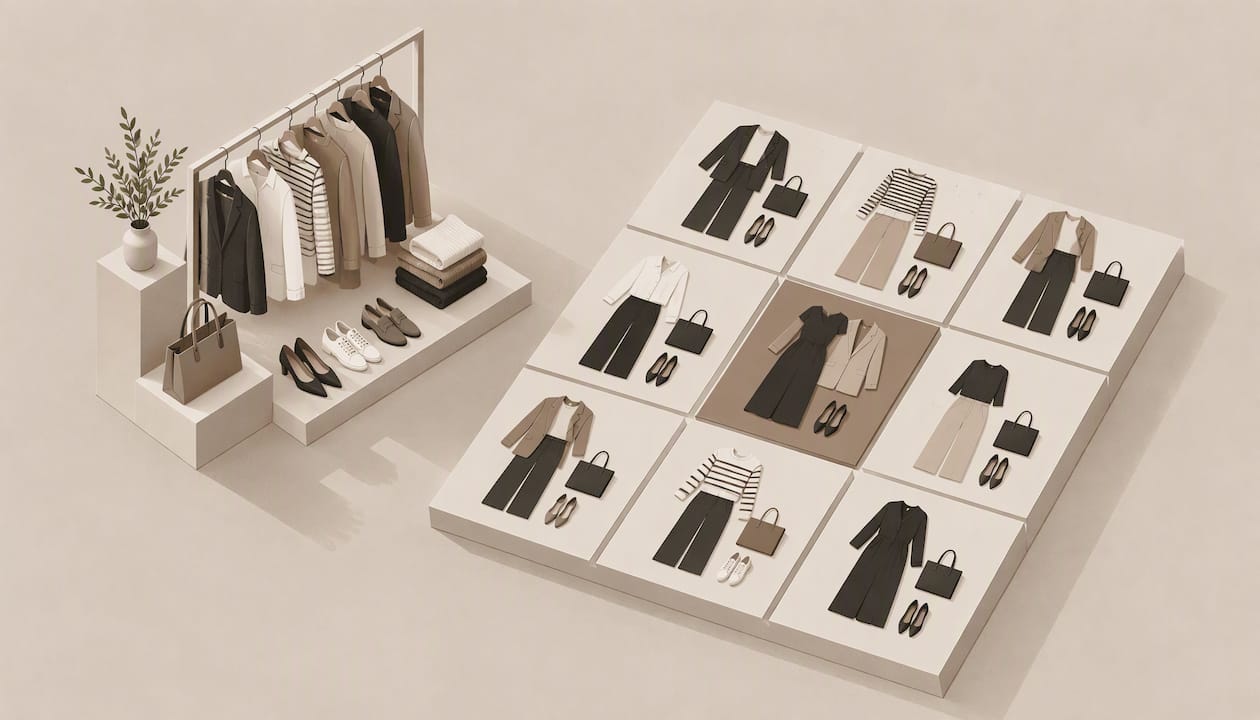
A plus size capsule wardrobe is a small set of pieces that fit you well, share a color palette and mix into many outfits. The difficulty is rarely the concept. It is finding well-made pieces in your size, then choosing the ones that work together. This guide covers the building blocks, the formulas, a way to deal with inconsistent sizing, and how to adapt the plan for work and for pregnancy.
TL;DR
- Start with what you own. Audit your closet, keep what fits and gets worn, and shop only for the gaps.
- Pick a palette of two or three neutrals plus one or two accent colors, so every top works with every bottom.
- Ignore the size on the tag. Buy against your measurements, because sizing varies from brand to brand.
- Use a formula such as 3-3-3 or 5-4-3-2-1 as a starting audit, then adjust it to your real week.
- Pregnancy and work capsules follow the same logic: fewer pieces, more repeat wear, and a clear plan for each.
Table of Contents
- Why a capsule matters more when sizes are hard to find
- Step one: audit before you shop
- Choose a palette that does the work for you
- The pieces most plus size capsules are built on
- Deal with sizing before it costs you
- Formulas to use as a starting grid
- A sample 16-piece plus size capsule
- A plus size work capsule
- Weekend, travel and the rest of life
- Perspective: what 20 years of styling taught us
- Plan your shopping around the gaps
- Turn the audit into a plan with Style To Cart
- Adapting the capsule for pregnancy
- Keep the capsule alive
- FAQ
- Sources
Why a capsule matters more when sizes are hard to find
Plus size women are the majority of the market, not a niche. About 67% of American women are plus size, defined as size 14 or above, and the average woman is a size 16 to 18. Yet the same reporting notes that representation in high fashion is very limited. Shoppers feel the gap. An industry analysis on why inclusive sizing is needed cites a survey in which 72% of millennials are dissatisfied with current plus size offerings, mainly because of inconsistent sizing, poor fit and limited availability of trendy, functional clothing.
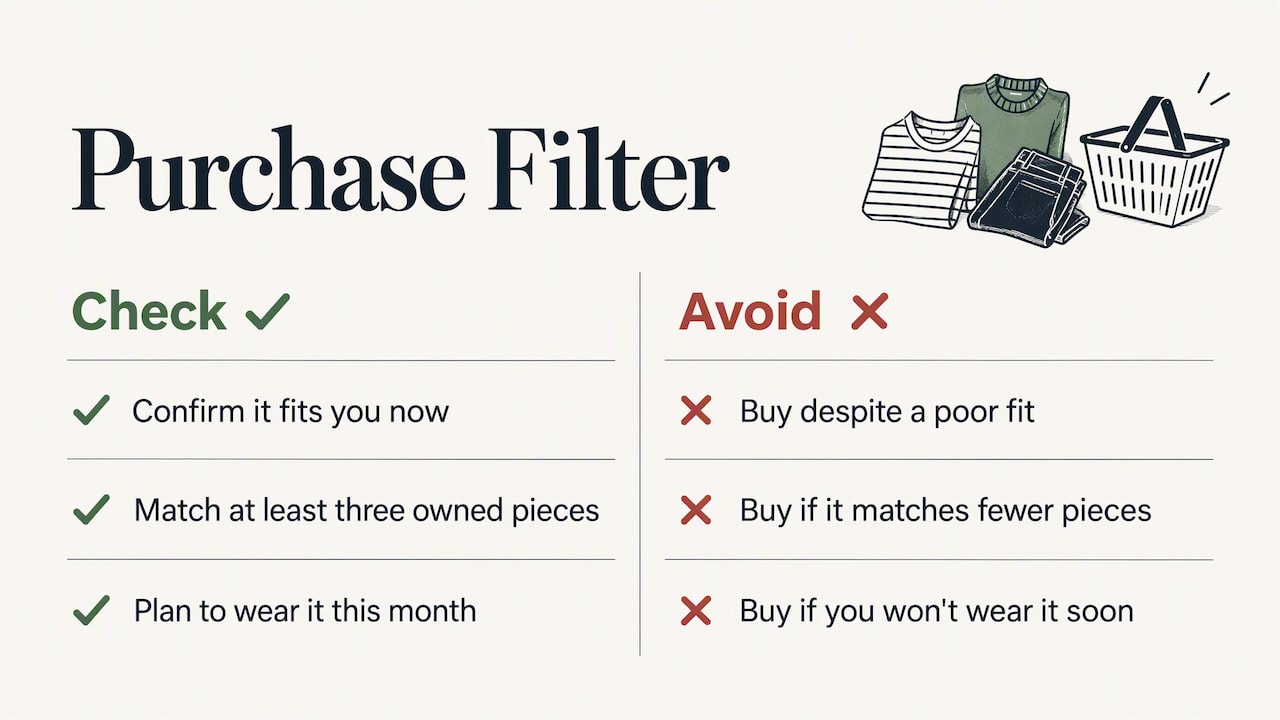
That is exactly why a capsule helps. When good options are scarce, every purchase has to earn its place. A capsule gives you a filter: does this piece fit me now, does it work with at least three things I already own, and will I wear it in the next month? If the answer to any of those is no, you keep your money.
It also removes a quiet source of stress. A New York Times piece on capsule wardrobes for travel calls the idea fashion algebra: how few garments can you mix and match to get a given number of outfits. The same math applies at home. Fewer, better-fitting pieces beat a closet of items that almost work.
Step one: audit before you shop
Most capsule guides jump straight to a shopping list. We would not. Most women already own a third to half of a working capsule and do not realize it, because the good pieces are buried among the ones that never quite fit.
Try this over one evening:
- Pull everything out. Sort into four piles: wear often, fits but never worn, almost fits, and does not fit.
- Try on the middle two piles. Be honest about comfort, not just appearance. If you tug, adjust or sit differently in it, it is not a capsule piece.
- Photograph the keepers. Seeing flat pictures of your pieces side by side shows you which colors and shapes repeat.
- Name the gaps. Write down what you reach for and cannot find: a neutral top that goes under blazers, a pair of trousers that sits right at the waist, a third layer for cold offices.
- Store the maybes. Box the almost-fits for a month. Anything you do not miss can go.
If your closet feels full but you still have nothing to wear, that is a common pattern with a clear cause: too many pieces that do not connect to each other. A capsule fixes the connections, not just the count.
Choose a palette that does the work for you
Color is the cheapest way to multiply outfits. Pick:
- Two or three base neutrals. Black, navy, charcoal, camel, cream, olive or denim all work. Choose the ones that sit well against your skin and hair, and that you already own the most of.
- One or two accent colors. These go on tops, scarves and layers, so you can change the feel of an outfit without replacing the trousers.
- One pattern at most. A stripe, a small print or a texture such as ribbed knit adds interest without making pieces harder to pair.
If you want help turning that palette into real outfits, our color combination guide walks through ten pairings you can wear, not just admire.
The pieces most plus size capsules are built on
There is no single correct list, and a lawyer and a teacher need different things. Still, stylist-written lists agree on a core. A Who What Wear roundup of plus size capsule essentials names jeans, button-down tops, skirts, an everyday sweater or cardigan, trousers, dresses, coats, jackets or blazers, boots and loafers or flats. PureWow also has a stylist-picked list of ten plus size capsule items if you want a second take.
Here is how we would translate that into a working structure.
| Category | What to look for | Why it earns its place |
|---|---|---|
| Tops (4 to 6) | Soft, mid-weight knits, one crisp button-down, one sleeveless shell for layering | Covers work, weekend and layering |
| Bottoms (3 to 4) | One dark jean, one trouser, one skirt or wide-leg pant | Different occasions, same palette |
| Layers (2 to 3) | Blazer, long cardigan, a light jacket | Adds structure and finishes outfits |
| Dresses (1 to 2) | A wrap or A-line shape in a fabric that does not cling | A one-piece outfit for days with no energy |
| Shoes (2 to 3) | One flat, one boot, one comfortable dressy option | Wearable for a full day |
| Outerwear (1 to 2) | A coat that closes comfortably over layers | Often the pricey piece, so buy for fit |
That is roughly 14 to 20 garments. Your number can be higher or lower. The point is that every piece has a job.
Fit details that matter more than the label
A few details separate a capsule that works from one that sits in the closet:
- Armholes and upper arms. Sleeves that pinch stop you from layering. Test every top with a blazer or cardigan over it.
- Rise on trousers and jeans. A rise that sits at the natural waist and does not roll or gap is worth paying for.
- Stretch with recovery. Fabric that has some stretch and bounces back keeps its shape after a day of sitting.
- Length. Hems that hit in an awkward spot make outfits look unfinished. Tailoring a hem or waistband is often cheaper than replacing the garment.
- Opacity. Hold light-colored pieces up to a window before you commit.
Flattering, in practice, is about shape and structure rather than rules. Retailer style guides, such as this one on how to dress flattering as a plus size woman, suggest silhouettes like A-line, empire waist or structured pieces that follow the body’s strongest lines. Treat that as a starting point and trust your own mirror and your own comfort.
Deal with sizing before it costs you
Sizing is the biggest practical hurdle. A Vogue Business survey of 687 readers in the US and UK found that 91% of consumers say their size varies significantly between brands. The same analysis describes shoppers ordering several sizes at once to find a fit, and new inclusive ranges that are announced but rarely in stock.
What that means for you:
- Measure yourself. Bust, waist, hips and, for trousers, your inseam. Write them in your phone and compare to each brand’s size chart, not to the number you usually wear.
- Read fit notes and reviews. Look for comments from people with a similar build, such as “runs small in the hips” or “sleeves are generous.”
- Buy one test piece per brand. If a brand fits, build from it. If not, you have lost one item and not a whole order.
- Check the return window before you click. A capsule is about a few right purchases, so make returning the wrong ones easy.
- Be wary of the label “size-inclusive.” Some shoppers report that brands offer only a few pieces in larger sizes to use the term. Look at how much of the range actually comes in your size, and whether the construction matches the smaller sizes.
None of this is a personal failing. Sizing is inconsistent across the industry, and your measurements are the more reliable guide.
Formulas to use as a starting grid
You have probably seen the “3-3-3 rule”: three tops, three bottoms and three pairs of shoes, which can make up to 27 outfit combinations. The same source describes the 5-4-3-2-1 method: five tops, four bottoms, three layers, two pairs of shoes and one dress. It treats the formulas as audit tools for a closet you already own rather than rigid shopping lists, and we agree.
Here is how we would use each:
| Formula | Best for | Watch out for |
|---|---|---|
| 3-3-3 | A single season or a short trip | Leaves little room for layers or dressier days |
| 5-4-3-2-1 | A full season of work and weekend | Count what you wear, not what you own |
If you count your current closet against 5-4-3-2-1 and you have eleven tops and one bottom you love, you have found your gap. That tells you what to buy, and just as useful, what not to.
Once the pieces are in place, turn them into outfits you can repeat. Our outfit formulas give you twelve looks to build from your own closet, and the day-to-night formula shows how one outfit can change with a layer and an accessory.
A sample 16-piece plus size capsule
This is an example, not a prescription. Swap the colors for your own palette.
- Tops (5): white or cream button-down, black fine-knit tee, a striped long-sleeve, an accent-color knit, a silky shell
- Bottoms (4): dark straight or wide-leg jeans, black ponte trousers, a camel or olive trouser, a midi skirt
- Layers (3): a tailored blazer, a long cardigan, a denim or utility jacket
- Dress (1): a wrap dress in a matte, structured jersey
- Shoes (2): a supportive flat or loafer, an ankle boot
- Outerwear (1): a coat with room for a blazer underneath
That set yields dozens of combinations because every top works with every bottom. If you wear it on a rotation, you will notice which piece gets the most wear and which sits untouched, and that tells you what to replace first.
A plus size work capsule
A work capsule is a capsule with a stricter brief: it has to look polished, survive a commute and stay comfortable through meetings. Start with the same palette idea, but weight it toward bottoms and layers that signal structure.
- Two pairs of trousers that fit at the waist without a belt
- A blazer that closes and does not pull across the back
- Three tops that work tucked or untucked
- A dress you can wear alone or under a cardigan
- One pair of shoes you can walk in for a full day
The goal is a morning that takes minutes. We lay out the method in the five-minute work wardrobe. The short version is to decide your outfits in advance, in a batch, rather than each morning under time pressure.
Weekend, travel and the rest of life
Capsules often fail on weekends because the “real clothes” only cover work. Add two or three pieces that are comfortable and still deliberate: a pair of soft pants or jeans you actually love, a knit that is cozy but not shapeless, and a casual shoe. Our weekend casual formula shows how to make that combination look put together without effort.
For travel, take the same logic down to a smaller set: choose one palette, pack pieces that all pair, and plan outfits before you go.
Perspective: what 20 years of styling taught us
We have spent more than two decades styling women one by one, and the same pattern shows up regardless of size. Women rarely have a shopping problem. They have a planning problem. The closet holds good pieces that have never been connected into outfits, and the shopping happens to fill an emotional gap rather than a wardrobe gap.
For plus size women the pattern has one extra layer: the market makes fit harder, so each mistake costs more in time and money. That is why we push the audit first. When you can see what you own, what you wear and what is missing, you shop less, return less and feel less discouraged by a rack that does not carry your size.
We also come from an education background, and it shapes how we teach. Styling is a skill, not a talent. Once you understand why a rise works on you, why a color sits well with your hair, or why a layer finishes an outfit, you stop depending on trends and start making decisions with confidence. That idea sits behind personal style after 40 and everything else we publish: knowing yourself matters more than following a trend.
One piece of advice we repeat in every consultation: build around the clothes you already feel good in. A capsule that makes you feel like someone else is not a capsule, it is a costume.
— Wendy
Plan your shopping around the gaps
Once you have your audit, shop with a list. A few habits help:
- Keep a wish list. Add items when you see them, then wait a week. Anything you still want and that fits your palette goes on the buy list. We cover the method in how to build a clothing wish list that actually works.
- Spend where wear is highest. Trousers, jeans, a coat and shoes get the most use, so fit and fabric matter most there.
- Buy the version you will wear, not the aspirational one. If you do not wear heels, a heeled boot is not a capsule piece.
- Add one piece at a time. Every new piece should make at least three new outfits with what you own.
Turn the audit into a plan with Style To Cart
This is the work we built Style To Cart to do. It is a fashion technology platform for women that lets you assess your closet virtually, spot the gaps, find new ways to wear what you already own and shop strategically. It carries over 20 years of Wendy’s wardrobe styling experience, so the guidance reflects how real women dress, not how a catalog looks. If you want to see how it works, start at wendypilch.com, or read about how Wendy went from stylist to software founder.
Adapting the capsule for pregnancy
Many readers search for a maternity capsule, and the principles are the same with a different timeline: your body changes, so the capsule needs to change with it. Because every pregnancy is different, we would not give a fixed number of pieces. A few practical ideas:
- Start with what stretches. Knit dresses, leggings, wrap tops and cardigans often work for part of pregnancy, so check what you own before you buy.
- Buy for the stage you are in. Pieces that fit at 12 weeks may not fit at 35 weeks, and your shape in later months is hard to predict. Shop in small steps.
- Prioritize the bottoms. A comfortable pair of jeans or pants with a stretch panel gets the most wear. Try a few before choosing.
- Keep your palette. A consistent color scheme makes a small set of maternity pieces go further, and lets you mix in clothes you already own.
- Think about after. Wrap dresses, stretch tops and soft layers often stay useful during the postpartum months.
For questions about what is safe or comfortable for your body, such as compression, support garments or weight changes, ask your obstetrician or midwife. Clothing advice does not replace that.
Keep the capsule alive
A capsule is not a one-time project. Check in at the change of each season: what did you wear, what did you skip, what no longer fits or feels right? Replace one or two pieces and leave the rest. If you want a deeper look at how personal style develops over time, our post on what 20 years as a wardrobe stylist taught me about personal style is a good next read, and The Edit collects everything else.
FAQ
What is the 3-3-3 rule for clothes?
The 3-3-3 rule means choosing three tops, three bottoms and three pairs of shoes that all mix together. That can produce up to 27 outfit combinations. It works best as a short-term or travel set, or as a way to audit what you already own.
What is the most flattering style for plus size women?
There is no single answer, because flattering depends on your proportions and what you like. Many stylists point to A-line shapes, empire waists and structured pieces that follow the body’s strongest lines. Try a few silhouettes and keep the ones that feel comfortable as well as good.
What is the 5-4-3-2-1 method of wardrobe?
It is a formula of five tops, four bottoms, three layers, two pairs of shoes and one dress. It allows for the fact that different garment types get worn at different rates. Use it to count what you own and spot the category you are short in.
How many pieces should a plus size capsule wardrobe have?
Most capsules land between 14 and 30 pieces, depending on climate, job and how often you do laundry. Start smaller than you think you need and add only when you find a repeated gap. The right number is the one where every piece gets worn.
Sources
- NYFW: 67% Of American Women Are Plus-Size (Forbes)
- Why We Need Inclusive Sizing (The Robin Report)
- What’s the Perfect Capsule Wardrobe for Traveling? (The New York Times)
- 10 Chic Essentials Worth Adding to Your Plus-Size Capsule Wardrobe (Who What Wear)
- 10 Plus-Size Capsule Wardrobe Items, Per a Stylist (PureWow)
- How to Dress Flattering as a Plus Size Woman (Especially Yours)
- The Editor’s Cut: Vogue Business Consumer Sizing Survey (Vogue)
- Why “size-inclusive” has become the most distrusted phrase in fashion marketing (The Curvy Fashionista)
- The TikTok Fashion Rules, Reconsidered (Fair Fit Method)
Recommended
About Wendy
Wendy Pilch is an award-winning wardrobe stylist, entrepreneur and Founder & CEO of Style To Cart. After more than 20 years of helping women build wardrobes and define their personal style, Wendy is bringing that experience to fashion technology.