Outfit Formulas: 12 Looks You Can Copy From Your Closet
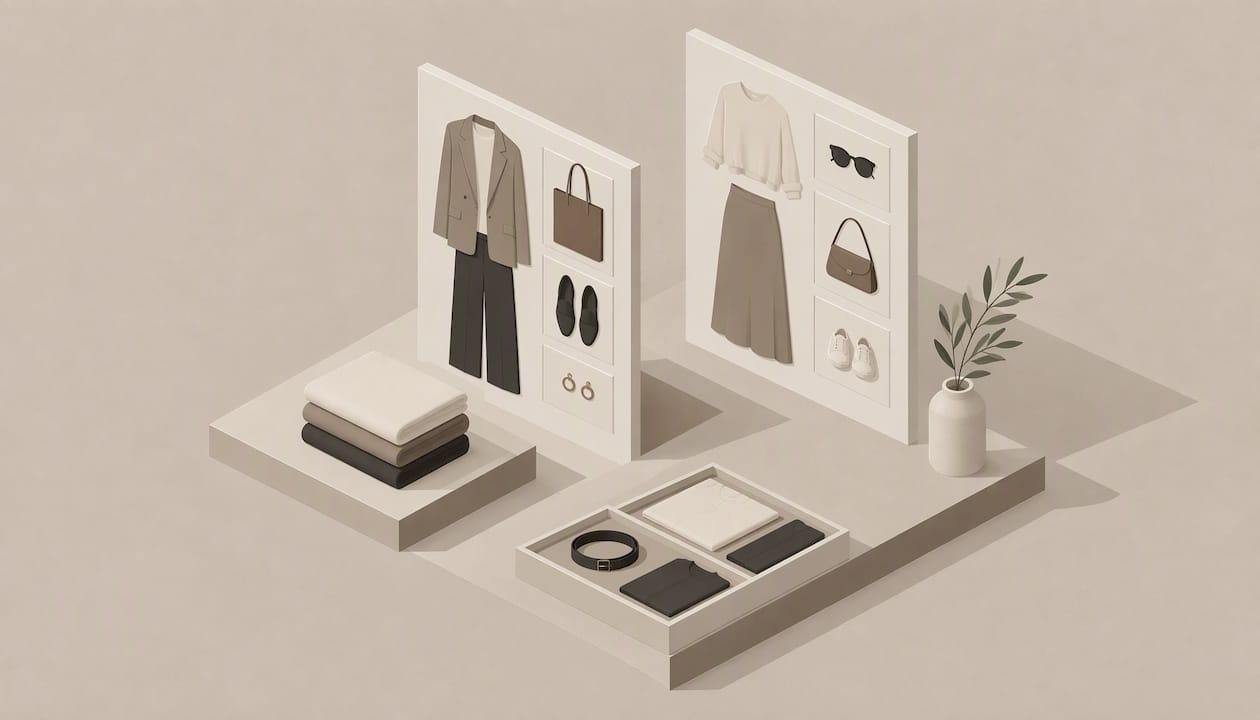
An outfit formula is a repeatable clothing template: pick it once and you can get dressed fast, and well, every day. At Wendy Pilch, we explore this system because wardrobe-planning research treats getting dressed as a matching problem. Formulas cut the guesswork, stretch the pieces you own, and make outfits feel deliberate.
TL;DR:
- Pull frequently worn pieces, label each as a statement, neutral, or styling detail, then test three combinations against your activities and fit.
- Change only one element at a time, such as color, proportion, or texture, so you can see what works without breaking the formula.
- For a capsule wardrobe, combine a blazer, white tee, and dark denim, then add heels to shift the outfit from day to evening.
- Use one color family for monochrome looks, neighboring shades for harmony, or opposing colors for contrast, while keeping layers functional and proportionate.
- Treat numeric fashion rules as starting points, not strict limits; adapt them to your closet and test combinations against real activities and fit.
Table of Contents
- 1. What is an outfit formula and why does it work?
- 2. Which numbered outfit formulas can you use right now?
- 3. How do you make formulas work with your own closet?
- 4. What color and layering rules improve any formula?
- 5. Which minimalist formulas fit a capsule wardrobe?
- 6. Why do I teach formulas instead of single outfits?
- 7. How does Style To Cart turn formulas into a daily system?
- FAQ
- Sources
1. What is an outfit formula and why does it work?
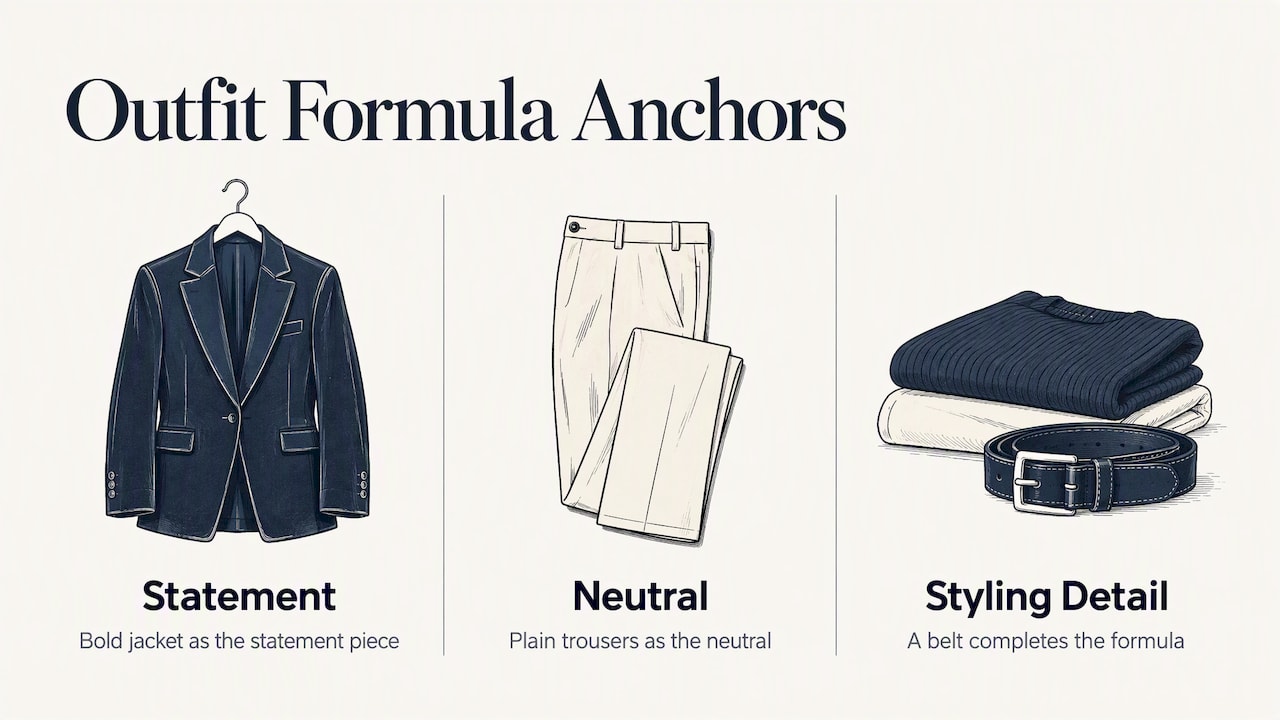
A formula is a pattern, not a shopping list. A common one is statement piece plus neutral plus a styling detail, such as a bold jacket, plain trousers, and a belt. You swap the actual garments while the structure stays the same.
This works because your clothes act as a system, not a pile. Researchers who study outfit building from a large wardrobe point to how complex it is to combine garments, which is why system-level guidance helps. Fashion editors lean on shortcuts too. The third piece and the 3-3-3 rule are popular heuristics, and the advice is to tweak them for your real closet rather than follow them rigidly.
2. Which numbered outfit formulas can you use right now?
Each formula below includes a quick how-to, a situation, and one swap.
- Casual day: Tee + straight jeans + sneakers. Add a light jacket as your third piece. Swap jeans for relaxed chinos.
- Smart casual: Knit top + tailored trousers + loafers. Roll the sleeves for ease. Swap loafers for clean flats.
- Office: Blazer + shell top + pleated trousers. Keep the palette to two colors. Swap the blazer for a structured cardigan.
- Date night: Slip skirt + fitted top + heeled boots. Add one piece of jewelry. Swap the skirt for dark denim.
- Weekend errands: Sweatshirt + leggings + a long coat. The coat lifts the whole look. Swap leggings for joggers.
- Travel: Knit set + lightweight trench + slip-on shoes. Choose wrinkle-resistant fabric. Swap the trench for an overshirt.
- Transitional weather: Long-sleeve tee + vest + jeans. Layers come off easily. Swap the vest for a denim jacket.
- Statement-led: One bold item (a printed skirt, say) + a plain tee + neutral shoes. Let the print do the talking. Swap the skirt for a bright blazer.
- Monochrome: Top, pants, and shoes in one color family. Vary the textures so it doesn’t look flat. Swap the shoes for a contrasting bag.
- Tonal: Cream, oatmeal, and camel together. Add one darker accessory for depth. Swap camel for gray.
- Playful trend: Cargo pants + fitted baby tee + chunky sneakers. Keep the top simple. Swap cargos for a midi skirt.
- Dress down a dress: Slip dress + tee underneath + boots. It reads relaxed and layered. Swap the tee for a thin turtleneck.
3. How do you make formulas work with your own closet?
You don’t need new clothes, just a quick audit. Research on clothing matching says combinations should be tested against real activities, fit, compatibility, and versatility.
- Pull your staples. Gather the pieces you reach for most: favorite tops, bottoms, layers, and shoes.
- Map them to roles. Label each as a statement, a neutral, or a styling detail.
- Test three combos per formula. Try them on, then note which ones suit your actual week.
Swap color, proportion, or texture, but change only one variable at a time. Keep a wide-leg pant with a fitted top, for example, and the formula still holds.
Pro Tip: Photograph your three best combos per formula so you can skip the decision on busy mornings.
4. What color and layering rules improve any formula?
Color is the fastest upgrade. Color theory for clothing describes cohesive schemes you can borrow without a design degree.
- Monochrome: one color family head to toe.
- Analogous: neighboring shades, like navy with teal.
- Complementary: opposites, like rust with blue, for punch.
Pair one statement piece with a grounding neutral, a simple high-return heuristic in current editorial coverage. For layering, runway-led advice from Vogue’s layering guide says to use functional separates, control proportion, and unify layers with a shared color or texture.
Rule of thumb: make every layer earn its place, or take it off.
5. Which minimalist formulas fit a capsule wardrobe?
A small wardrobe multiplies when you commit to a neutral palette plus one accent. Minimalist formulas lean on a blazer, dark denim, and a maxi dress styled several ways.
- Blazer + white tee + dark denim: day to evening by adding heels.
- Maxi dress + denim jacket: casual by day, drop the jacket at night.
- Knit + wide trousers + loafers: polished and easy.
- Neutral set + one accent bag: the accent is the only thing that changes.
Choose versatility over trend-chasing, and every piece works harder.
6. Why do I teach formulas instead of single outfits?
I teach formulas because an outfit solves one morning, while a formula can help you get dressed repeatedly. With experience in styling and a background in education, I have learned that women don’t need more clothes. They need a repeatable way to see what they already own. You can read more about my path from stylist to software founder.
— Wendy
7. How does Style To Cart turn formulas into a daily system?
We built Style To Cart so formulas live in your closet, not just in your head. You can assess your wardrobe virtually, plan outfits, and spot the gaps worth filling. See how it works on our founder page, and start building your system today.
FAQ
What is an outfit formula in simple terms?
An outfit formula is a repeatable template for combining clothes, like statement piece plus neutral plus styling detail. You can swap the actual items while the structure stays the same.
What is the 3-3-3 rule in fashion?
It is a numeric heuristic for building outfits and wardrobes from a small set of pieces. Coverage in The Washington Post advises tweaking it to fit your real closet rather than following it rigidly.
How do I use outfit formulas with clothes I already own?
Pull your staples, label each as a statement, neutral, or styling detail, and test three combinations per formula. Swap one element at a time so the formula stays intact.
Can outfit formulas work for a minimalist wardrobe?
Yes. A neutral palette with a single accent gives you many combinations from few pieces, and simple swaps move a look from day to evening.
Sources
About Wendy
Wendy Pilch is an award-winning wardrobe stylist, entrepreneur and Founder & CEO of Style To Cart. After more than 20 years of helping women build wardrobes and define their personal style, Wendy is bringing that experience to fashion technology.