Plus Size Work Outfits: What to Wear Every Day at the Office
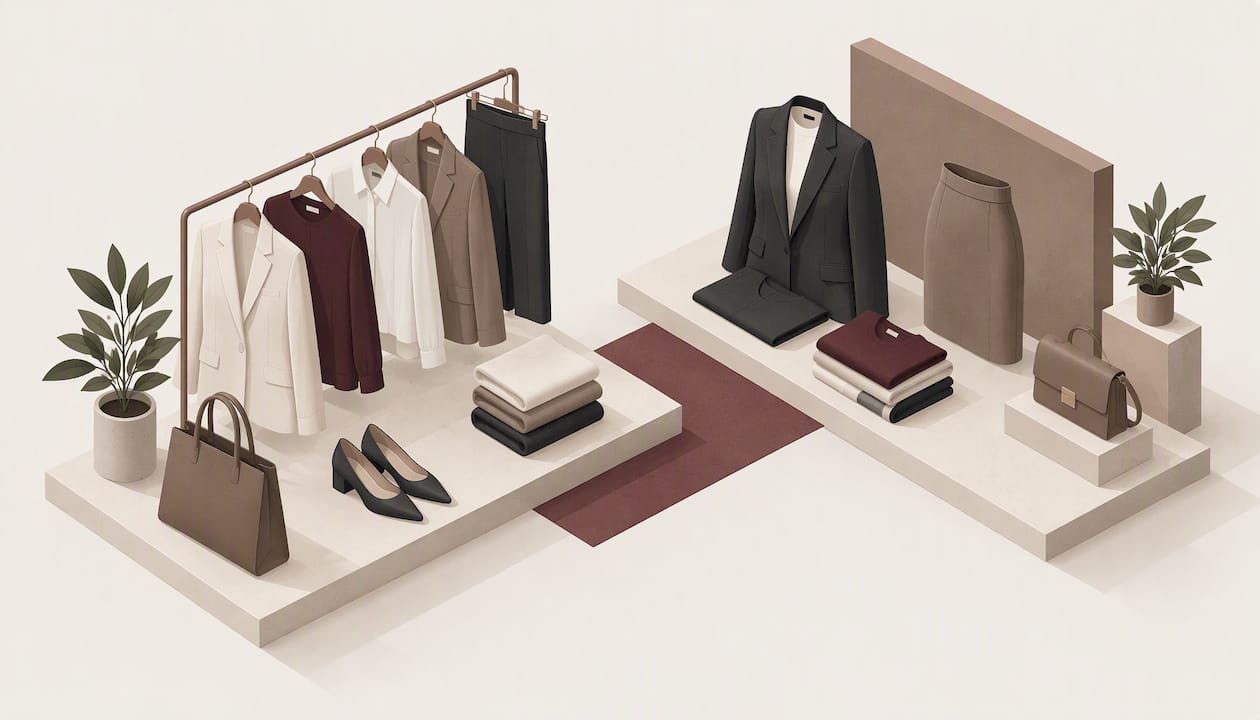
The best plus size work outfits start with a few pieces that fit your body well, in fabrics that hold their shape, repeated in formulas you trust. Think tailored trousers, a blazer, a wrap or shirt dress, and a handful of tops, not a closet full of trend pieces. Below you will find the fit checks that matter, outfit formulas for business casual and formal days, ideas for each season, and a way to plan a week of outfits without daily guesswork.
TL;DR
- Fit beats label size. Measure bust, natural waist, hips and inseam, and check how a waistband feels sitting down, not just standing.
- Choose fabrics with structure and drape, such as ponte, crepe, wool and cotton, so pieces look sharp at 9 a.m. and at 5 p.m.
- Build around four anchors: a tailored blazer, wide-leg or straight-leg trousers, a wrap or shirt dress, and a midi skirt.
- Use a repeatable formula for each dress-code level: everyday, business casual, client meeting and casual Friday.
- A small, color-controlled wardrobe (the 3-3-3 idea, or a capsule) makes getting dressed faster and shopping more strategic.
Table of Contents
- Start with fit, not the size label
- Fabrics that look polished and stay comfortable
- Everyday office outfits you can repeat
- Plus size business casual
- Formal days and client meetings
- Casual Friday and creative offices
- Adapting outfits to the seasons
- Build a small work wardrobe that mixes
- Our perspective: dress for the job, not against your body
- Plan your work outfits with Style To Cart
- FAQ
- Sources
Start with fit, not the size label
Most work-clothing frustration is a fit problem, not a body problem. Size labels vary from brand to brand in the U.S., so a 20 in one place can be an 18 or a 22 in another. Your measurements are a more reliable guide than the number on the tag.
A useful starting routine comes from a plus-size workwear fit guide: measure your bust, natural waist, hips and inseam, and do it over a fitted underlayer so the numbers reflect what you will actually wear. The same guide suggests considering the larger size in trousers or structured skirts when you fall between sizes, because comfort while seated is part of fit. A waistband that feels fine standing at the mirror can dig in after two hours at a desk.
When you try on work clothes, run through a short checklist. A 2026 workwear guide offers practical benchmarks:
- Trousers should skim rather than squeeze.
- Tops should not expose your midriff when you raise your arms.
- Buttons should not gape across the bust.
- Shoes should be comfortable enough that you can walk into a meeting with confidence.
Add two more of our own: sit down in everything before you buy it, and reach forward as if typing. If a shirt pulls, a jacket rides up or a waistband rolls, it will do the same on a Tuesday afternoon.
Tailoring is worth it
Off-the-rack clothes are cut for an average, and almost no one is exactly average. Hemming trousers, taking in a blazer waist or adjusting sleeve length is usually a modest cost that makes a mid-priced piece look custom. Vogue’s reporting on workplace fashion for plus-size people also recommends focusing on well-fitting core pieces and tailoring where possible, rather than settling for limited options. If one item in your closet fits perfectly, you will reach for it more than ten that almost do.
Fabrics that look polished and stay comfortable
Fabric does as much work as cut. For polish with comfort, a stylist quoted by Today points to ponte, crepe, wool, cotton and cashmere. These have enough body to skim over the figure instead of clinging, and they feel elevated for the office.
Here is how we think about them in practice:
| Fabric | Why it works at the office | Best for |
|---|---|---|
| Ponte | Stretchy, smooth, holds shape | Trousers, sheath dresses, blazers |
| Crepe | Drapes well, resists wrinkles | Blouses, wide-leg pants, dresses |
| Wool and wool blends | Structure and warmth | Blazers, trousers, skirts |
| Cotton poplin | Crisp, breathable | Button-down shirts, shirt dresses |
| Cashmere or fine knit | Soft, refined | Sweaters, cardigans |
The drape point on crepe is echoed by a 2026 business casual wardrobe guide, but you can test it in the fitting room: scrunch a handful of fabric in your fist for ten seconds. If it comes out creased, expect to be steaming it before every wear.
Stretch is welcome, especially for days that mix sitting and standing. Editors who tested a pair of high-waisted work pants reported that the stretch stayed comfortable through eight hours of sitting or standing. Look for the same quality in any trouser: give in the waist and seat, with enough weight that the fabric does not cling.
Everyday office outfits you can repeat
You do not need a new idea every morning. You need formulas, built from pieces that already mix. Stylist guidance is consistent here: the same silhouettes and fabrics that look good in straight sizes work equally well for plus-size clients. The difference is fit and proportion.
For the ordinary desk day, practical formulas include:
- Wide-leg trousers + poplin shirt + mules or block heels. Tuck or half-tuck the shirt to define the waist.
- Trousers + an elevated tee + blazer. A good option for creative offices. Choose a tee with a clean neckline and enough weight to look intentional.
- Belted shirt dress + low heel or mule. One piece, no coordinating needed. The belt marks the waist where you want it.
- Shirt dress layered under a blazer. The same dress, restyled for an event or a more formal day.
The core staples named across several stylist guides are well-fitted blazers, tailored trousers and wrap dresses. If you are starting from zero, spend your first budget there. For more on turning a handful of pieces into many looks, see our outfit formulas you can copy from your closet.
Balance proportions
A reliable rule: if the top has volume, keep the bottom sleek, and the other way around. A flowing blouse looks sharp with slim-fit trousers or a straight skirt; a fitted knit looks right with wide-leg pants. Proportion is where most “I don’t know why this looks off” outfits go wrong, and it is a simple fix once you see it.
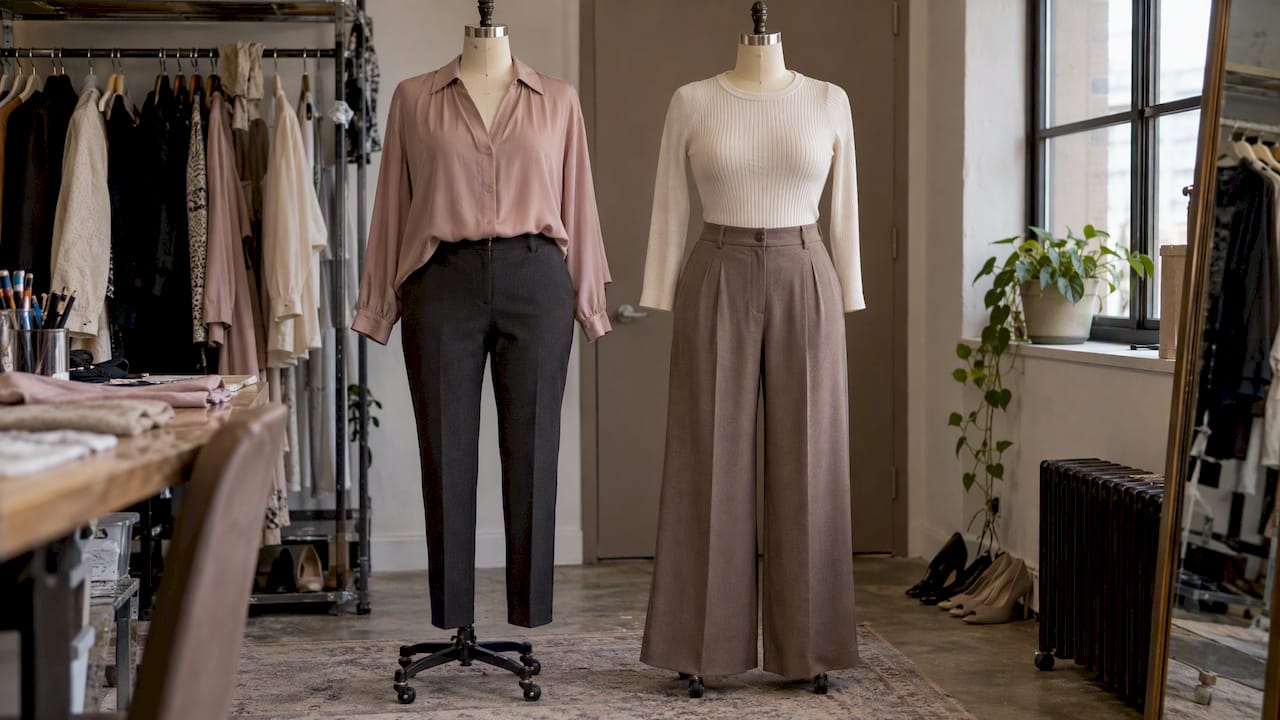
Two trouser shapes cover most situations. A workwear capsule guide from 2026 suggests owning at least two silhouettes, such as wide-leg and straight-leg, and notes that high-rise trousers stay put better when a blouse is tucked in. That second point matters if you spend your day moving between desk and meetings.
Plus size business casual
Business casual is the hardest dress code to read, because it means something different in every office. As a working definition: polished enough for an unexpected visitor, relaxed enough for a regular Wednesday.
Three combinations work across most business casual offices:
- Feminine blouse + sleek trousers + statement jacket. The blouse brings softness, the trousers bring line, the jacket brings authority. Retail style guides make the same suggestion.
- Midi skirt + fine-gauge sweater or tucked tee + loafers. Comfortable, easy to move in, and it works in every season with tights or bare legs.
- Dark, well-fitting jeans + blazer + a dressier top. Only where your office allows denim. If it does, keep the wash dark and the hems clean. Our guide to denim that actually fits walks through the fitting-room method.
If your office is somewhere between business casual and full corporate, lean to the formal side on the first week. You can always relax your outfits once you see what colleagues wear. It is much harder to recover from starting too casual.
Formal days and client meetings
For client meetings, presentations or leadership visits, polish comes from structure and a short list of finishing touches. One workwear guide recommends tailored trousers with a matching blazer, or a structured sheath dress with pointed heels and minimal jewelry.
Here is a quick look at each:
- The matching suit. Matching pieces create one long line, which looks tall and deliberate. Buy the jacket to fit your bust and shoulders, then have the trousers tailored.
- The sheath dress and blazer. Ponte or crepe in navy, black, charcoal or a deep jewel color. Add a structured bag and closed-toe shoes.
- Pencil or midi skirt, blouse, blazer. A classic that photographs well on video calls.
A formal capsule, as Vogue describes it, is built around tailored trousers, a pencil skirt, a blazer, closed-toe shoes and versatile outerwear. Then you add formal shirts and color gradually. Accessories finish the look: industry experts suggest structured handbags and belts to create an intentional, professional aesthetic.
If you are heading into a meeting and want a step-by-step approach, our guide to meeting outfits for women goes deeper. For interviews, see interview outfits for women.
A note on video calls
On camera, only the top half shows, so the neckline, shoulders and color matter most. Choose a structured blazer or a top with a defined shoulder line, and a solid color that contrasts with your background. Avoid tiny busy patterns, which can shimmer on screen.
Casual Friday and creative offices
Relaxed does not mean undone. The same formula guide pairs casual-Friday looks with tees, loafers or clean sneakers. Keep the structure and relax the finishes:
- Swap the poplin shirt for a substantial tee, but keep the blazer or a long cardigan.
- Wear loafers or clean white or neutral sneakers instead of heels.
- Keep trousers tailored. A relaxed fabric is fine; a baggy fit is not.
The test is simple: if you could be pulled into an unplanned meeting and feel fine, the outfit works.
Adapting outfits to the seasons
The same few pieces can cover all four seasons if you change the layers, not the wardrobe.
Spring and summer. Lead with the shirt dress and poplin shirt. Short sleeves or rolled sleeves in cotton keep you cool, and lighter shades such as stone, soft blue or sage feel seasonal without being casual.
Fall and winter. Per the same outfit guide, layer the tee under the shirt, or wear the shirt dress over ponte pants, then add a blazer or a scarf. Wool trousers and fine-knit sweaters add warmth without bulk.
Every season. Office temperatures swing. A neutral cardigan or blazer kept at your desk lets you adapt through the day, a tip also found in a business casual guide.
Color matters here too. Rich color is part of the advice in Vogue’s reporting: no rule says professional means beige and black. A cobalt blazer, emerald blouse or burgundy sheath dress is still office-ready. Our guide to outfit color combinations shows pairings you can wear, not just study.
Build a small work wardrobe that mixes
A small, coordinated wardrobe is not about depriving yourself. It is about knowing that nearly everything you own goes with something else.
The 3-3-3 rule, explained
The 3-3-3 method means choosing three tops, three bottoms and three pairs of shoes and remixing them. It works best with versatile pieces, a consistent color palette and reliable outfit formulas. The Washington Post describes the 3-3-3 rule and similar formulas as flexible guidelines rather than hard rules, useful for simplifying shopping and outfit decisions. Treat it as a starting frame, not a test.
A work version might look like this:
| Category | Pick three |
|---|---|
| Tops | White or ecru poplin shirt, a navy fine knit, a printed or colored blouse |
| Bottoms | Black wide-leg trousers, straight-leg trousers in a second neutral, a midi skirt |
| Shoes | Block-heel pump or mule, loafer, clean sneaker |
Add a blazer and a dress as bonus layers, and you have a surprising number of combinations. If three of each is too tight, widen the frame. Some guides suggest 20 to 25 coordinated pieces can cover most work weeks, though that depends on how often you do laundry and how formal your office is.
Pick a tight palette
Two neutrals plus one or two accent colors is a common structure, and it is what makes mixing easy. Navy and cream with a burgundy accent, or black and gray with emerald, both work. When every top goes with every bottom, mornings get shorter. For a deeper version of this approach, read our guides to a capsule wardrobe for women and a plus size capsule wardrobe.
Audit before you shop
Before buying anything, see what you already have. Pull out the pieces that fit, flatter and feel like you. Notice what you wear on repeat, and what is missing, such as a second pair of trousers or a blazer that sits properly across the shoulders. A wardrobe audit turns the shopping list from “I need more” into “I need these three things.” If mornings are your pressure point, the five-minute work wardrobe method helps you set outfits ahead of time.
Our perspective: dress for the job, not against your body
After more than 20 years of styling women, we have heard the same worries again and again: “Will I look professional?” “Will anything fit?” “Am I too much, or not enough?” Rarely is the answer a different body. It is almost always a different approach.
Here is what we believe. The rules of professional dressing are not secretly stricter for plus-size women, but access to well-made options has often been narrower, and that is a real obstacle, not a personal failing. Vogue’s reporting names anti-fat bias in professional clothing expectations, and we think it is worth saying plainly. So the strategy is not to hide. It is to choose a few pieces that fit properly, tailor them, wear color you like, and repeat what works.
We also believe in teaching, not just telling. The most useful moment in a styling session is when a client sees why a combination works: why this hem length, why that shoulder line, why the second trouser shape earns its place. Once you see the logic, you can shop alone, and the next outfit is easier than the last. That is how we think about everything we build.
— Wendy
Plan your work outfits with Style To Cart
Knowing the formulas is one thing; applying them to the clothes you already own is another. Style To Cart is a fashion technology platform for women that grew out of Wendy Pilch’s years of personal consultations. It lets you virtually assess your closet, identify gaps, find new ways to wear what you have and plan outfits, so shopping becomes strategic instead of impulsive. If you are a busy professional who wants a week of work outfits settled quickly, see how Style To Cart works, or read more about how Wendy went from stylist to software founder.
FAQ
What is the 3-3-3 rule for clothes?
It is a method of choosing three tops, three bottoms and three pairs of shoes and remixing them into outfits. It works best with a consistent color palette and versatile pieces. Treat it as a flexible guideline, not a strict rule, and add layers like a blazer or dress as needed.
How do I dress professionally when I’m plus size?
Start with fit: measure your bust, waist, hips and inseam, and choose clothes that skim rather than squeeze. Build around a tailored blazer, well-cut trousers and a wrap or shirt dress in structured fabrics, and tailor anything that almost fits. Finish with a structured bag, closed-toe shoes or loafers, and minimal jewelry.
What are the most flattering work clothes for plus-size women?
Flattering usually means well-fitted and balanced in proportion. Wrap dresses, tailored blazers and wide-leg or straight-leg trousers are repeat staples in stylist guidance. Pair volume on top with slim lines below, or the reverse, and choose fabrics such as ponte or crepe that drape rather than cling.
What should I wear to a plus size business casual office?
Mix polished and relaxed pieces: a blouse with sleek trousers and a jacket, a midi skirt with a fine knit, or dark well-fitting jeans with a blazer if denim is allowed. Keep the structure of tailored pieces and relax the finishes with loafers or a softer top. When unsure, dress slightly more formally in your first weeks.
How many work pieces do I need?
It depends on your office and laundry routine, but a small coordinated wardrobe goes a long way. Some guides suggest about 20 to 25 well-coordinated pieces can cover most work weeks. Focus on mix-and-match anchors first, then add accents.
Sources
- Universal Standard: 11 plus size office outfits from 5 pieces
- Universal Standard: sizing guide for plus-size workwear fit
- Today: 13 best plus size work capsule essentials
- Today: high-waisted work pants review
- Vogue: navigating workplace fashion as a plus-size person
- The Curvy Fashionista: plus size workwear in 2026
- Lands’ End: capsule wardrobe of work apparel
- Ashley Stewart: plus-size workwear outfits
- Anita: dressing for the office as a plus-size woman
- Macy’s: plus size office wear
- The Everygirl: the 333 styling method
- The Washington Post: the 3-3-3 rule and other fashion formulas
- Plus size business casual wardrobe guide
Recommended
About Wendy
Wendy Pilch is an award-winning wardrobe stylist, entrepreneur and Founder & CEO of Style To Cart. After more than 20 years of helping women build wardrobes and define their personal style, Wendy is bringing that experience to fashion technology.