Wedding Guest Outfits: What to Wear for Any Dress Code
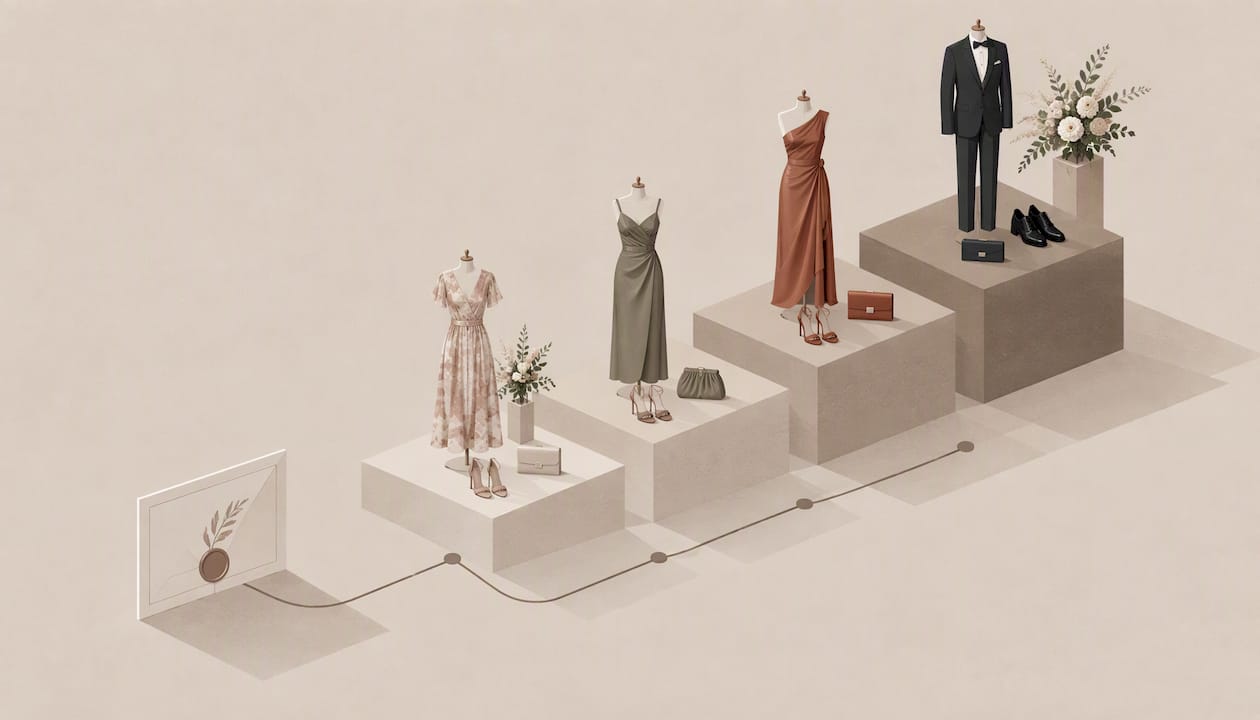
The right wedding guest outfit comes from three things: the dress code, the time and place of the ceremony, and the colors you steer clear of. Get those right and the dress, jumpsuit or separates you choose matter far less than you think. Below is how we decode an invitation, what to wear at each level of formality, and how to put a look together from pieces you may already own.
TL;DR
- Read the invitation, the time of day and the venue together. The venue and hour often tell you more than the dress code wording.
- Skip white, off-white and cream, and avoid the bridal party’s colors. Black is fine for most dress codes.
- When you can’t tell, dress slightly up, or ask someone in the wedding party.
- Shop your closet first, then fill only the real gaps. Rent only for a one-off statement look.
- If you’ll be in family photos, pick colors that sit together and avoid loud patterns.
Table of Contents
- Start With the Invitation, Then Check the Clock and the Venue
- Wedding Dress Codes Decoded for Women
- The Color Rules That Actually Matter
- Outfit Ideas by Season
- Build the Outfit in Five Steps
- Shop Your Closet First
- Rent or Buy?
- Our Perspective: Dress for the Day, Not the Dress Code Alone
- Photos: Wedding Pictures, Family Portraits and Photo Shoots
- Where Style To Cart Fits In
- Common Mistakes to Avoid
- FAQ
- Sources
Start With the Invitation, Then Check the Clock and the Venue
The invitation and the time of the wedding are your best guide to its formality, according to Emily Post’s wedding guest attire guide. The same guide adds that the nature of the service matters too: is it secular or religious?
Here is the mistake we see most. People lean on the dress code wording alone. In practice the venue, the time of day and the location often tell you more. A daytime “formal” wedding usually calls for a more modest, tea-length dress. An evening “formal” wedding points toward the floor-length gown.
So before you shop, answer five questions:
- What time does the ceremony start? After 5 p.m. leans dressier.
- Where is it: a house of worship, a ballroom, a vineyard, a beach?
- Is the ceremony religious or cultural? If so, check for head coverings or covered shoulders. These can outrank any seasonal trend.
- What does the couple’s website say about the dress code and the color palette?
- Will you be outside on grass, sand or cobblestones? Your shoes depend on it.
Wedding Dress Codes Decoded for Women
Emily Post’s attire guide ranks the formal end this way: White Tie is the most formal, then Black Tie. For women, here is what each level means.
| Dress code | What women wear | Length |
|---|---|---|
| White Tie | Formal evening gown, no exceptions | Floor-length |
| Black Tie | Formal gown or a very dressy cocktail dress | Floor-length or elegant midi |
| Black Tie Optional | Formal gown, shorter cocktail dress or dressy separates | Midi to floor |
| Formal / Cocktail | Cocktail dress, dressy jumpsuit, elegant separates | Knee to midi (tea-length by day) |
| Semi-formal | Dress or polished separates, not too casual | Knee to midi |
| Casual | Sundress or nicer casual wear | Any, if it’s polished |
The first three rows follow Emily Post. The rest are our own plain-language reading, so treat them as a starting point and adjust to the venue and hour.
Black tie and black tie optional
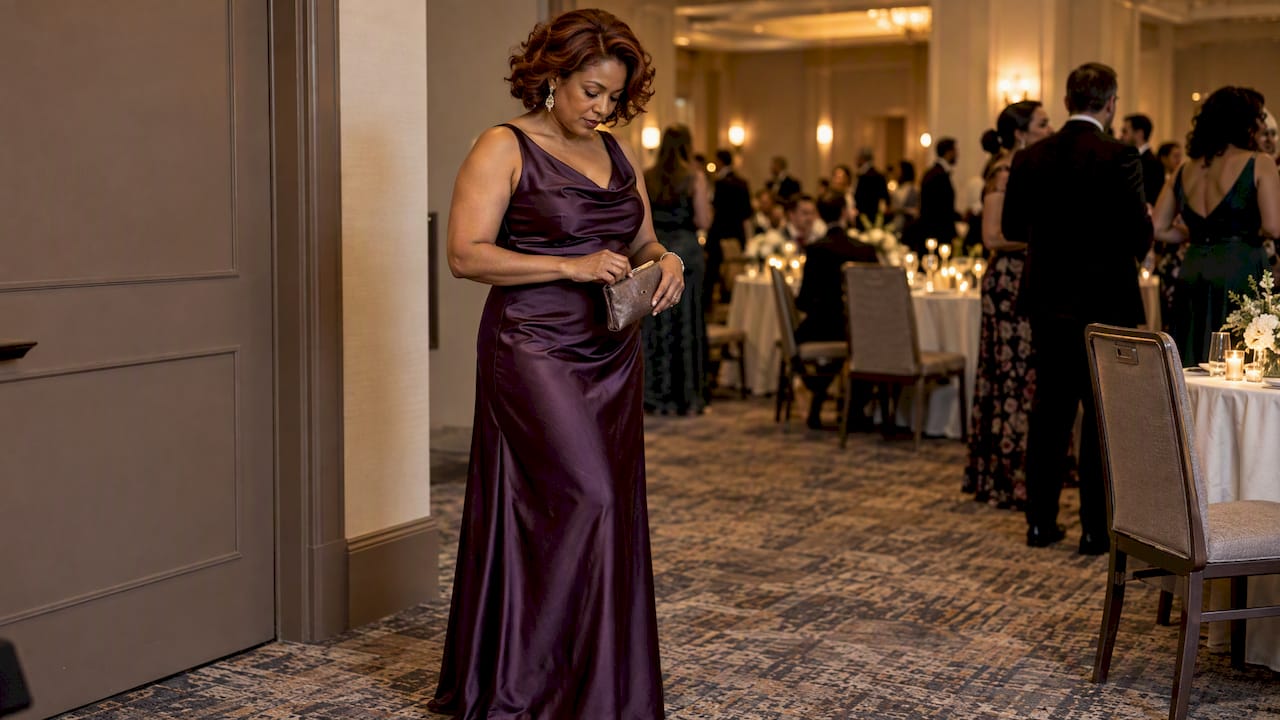
Brides says black tie is typically for formal evening events, with floor-length gowns expected. If you wear a shorter dress to a black tie optional wedding, choose a rich fabric such as satin, crepe or velvet. Add statement earrings and a structured clutch to lift it.
Cocktail and semi-formal
This is the most common dress code, and the most flexible. A midi dress, a tailored jumpsuit, or a silk skirt with a fitted top all work. Fabric does the heavy lifting: it should look dressier than your workweek clothes. If a piece could go to a client meeting without changes, add a stronger shoe and jewelry, or choose something else. Our meeting outfits guide shows how to tell the difference.
Casual, beach and garden
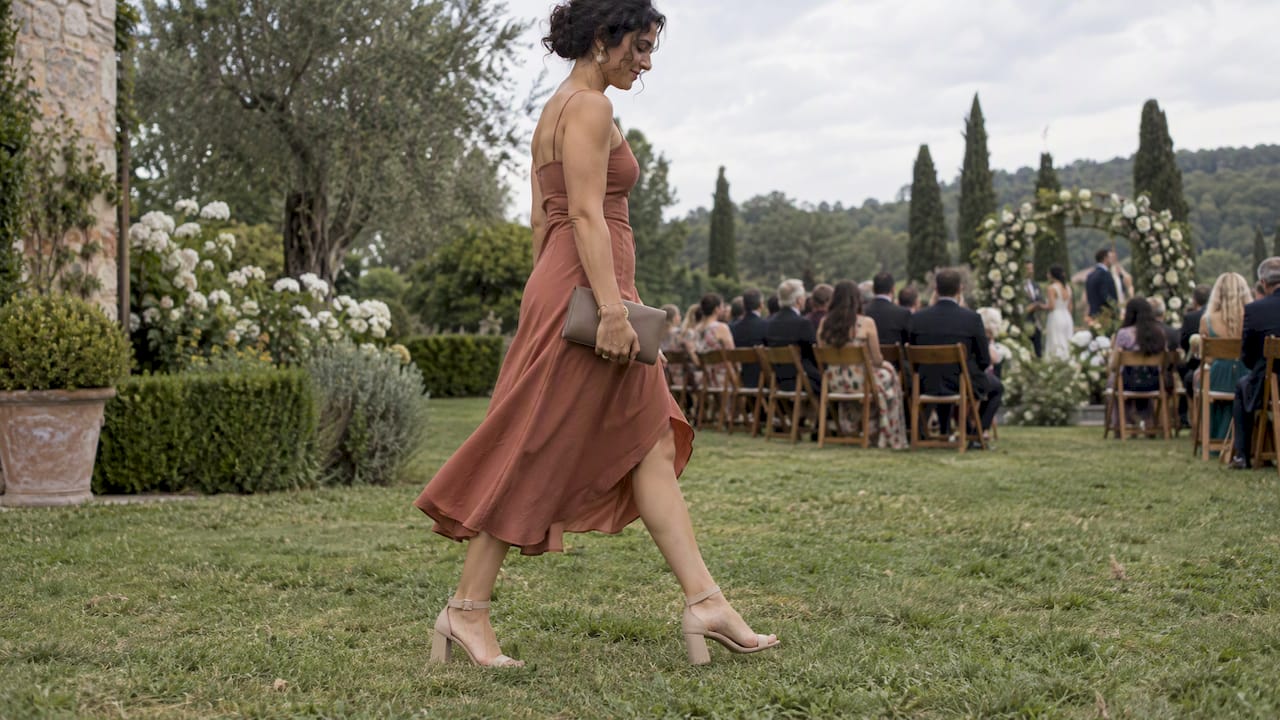
Casual still means clean and put together. Emily Post lists a sundress or a long or short skirt as typical casual choices. For a beach or lawn wedding, pick block heels, wedges or dressy flats. Stilettos sink.
Creative or unclear dress codes
If a phrase like “creative black tie” leaves you guessing, Cosmopolitan’s wedding guide reports that stylists suggest politely asking a member of the wedding party for an example. If you can’t ask, dress slightly up. Being a little overdressed is safer than being underdressed.
The Color Rules That Actually Matter
Avoid white, ivory and cream
The etiquette is firm: guests avoid white, off-white and cream so they don’t upstage the bride. The exception is a couple who asks for an all-white dress code. Be careful with very pale champagne, blush and light silver in photos too. They can read as white under a flash.
Don’t match the bridal party
The invitation or wedding website often hints at the bridesmaids’ palette. Avoid that exact shade so you aren’t mistaken for part of the party.
Black is usually fine
Many guides say never wear black. Brides says it works for most modern dress codes, black tie included. The real no-go for an evening event is a mini dress, whatever the dress code level.
What about red?
In some cultures red is part of the bridal attire, so check the couple’s background first. Brides’ guide to wearing red suggests checking the invitation for color guidelines and favoring deeper reds. If you want help building a palette you’ll love, our outfit color combinations guide covers pairings you can wear in real life.
Outfit Ideas by Season
Season changes fabric and footwear more than formality. Your own climate and the venue matter most.
- Spring and summer: floral midi dresses, linen-blend or crepe jumpsuits, satin slip skirts with a fitted knit top. Bring a light wrap for evening air conditioning or a breeze.
- Fall: deeper tones such as olive, burgundy, navy and chocolate brown. Velvet or heavier satin for evening. A tailored coat or cape you can wear over the dress works well.
- Winter: long sleeves, midi or floor lengths, and tights or boots with a dressy finish if the venue is cold. Check that you can remove the coat comfortably indoors.
- Outdoor ceremonies: block heels, wedges or flats, and a dress that moves with you in wind.
Build the Outfit in Five Steps
- Pick the silhouette from the dress code and time of day. Evening and formal: longer. Daytime and cocktail: midi or knee.
- Choose the color. Check against the white and bridal-party rules, then against your skin tone and what you already own.
- Choose the shoe before the accessories. Venue surface decides the heel. Practice walking in new shoes at home.
- Add one focal accessory. Earrings, a clutch or a belt. One is enough.
- Plan the cover-up. Ceremony requirements, evening chill and dancing all matter. Pack a wrap or jacket that suits the dress.
A useful test is whether the outfit still works after eight hours: sitting, hugging, dancing and standing for photos.
Shop Your Closet First
Before you buy, try on what you have. A tailored black dress, a silk midi skirt, a satin camisole and a sharp blazer cover a surprising number of cocktail and semi-formal weddings. Change the shoes, jewelry and outer layer, and the same piece reads differently each time. Our day-to-night styling formula shows how to push a daytime piece into an evening look, and our date night outfits post has more dressy looks that start from your closet.
Write down what’s missing for this particular wedding. Often it’s one item: a shoe in the right height, a wrap, or a dress in a deeper color. Buying for a gap beats buying a whole new outfit.
Rent or Buy?
The answer depends on how many events you have. Guidance summarized by The Guardian says renting suits one-off, high-impact designer looks, while subscription models suit people who need a rotation across a season of events.
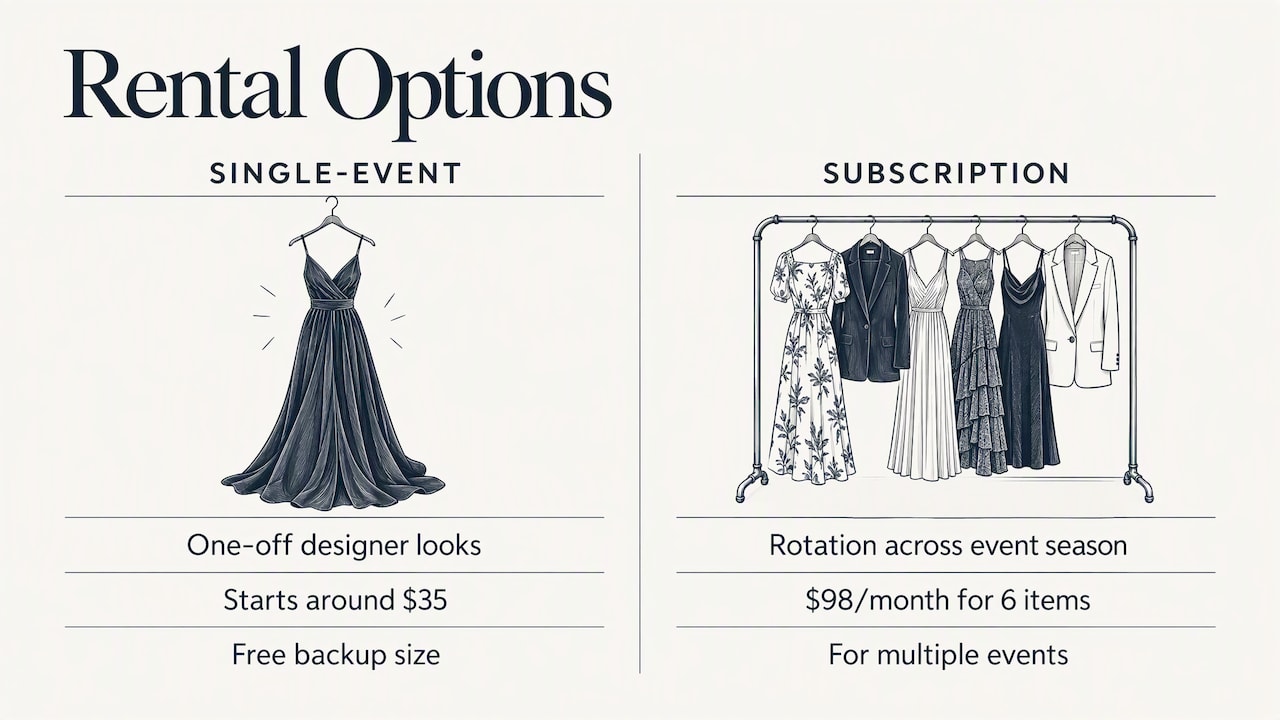
One 2026 rental comparison reports that single-event rentals start from around $35 and include a free backup size. It also lists a subscription at $98 a month for 6 items. Prices change, so check before you order.
If you rent, order with time to spare. The same guide advises choosing a delivery window that leaves at least two full days before the event, so you can test the zipper, hem, straps and shoes.
A simple rule of thumb: buy if you will wear it at least three times in the next year, rent if it’s a bold piece you’d never wear again.
Our Perspective: Dress for the Day, Not the Dress Code Alone
We have spent more than 20 years styling women’s wardrobes, and wedding season produces the same pattern every time. Women buy a new dress, then discover it doesn’t suit the venue, the shoes or the weather. Or they own the right thing and can’t see it because it’s buried in a closet.
Our view is that a wedding outfit is a planning problem before it’s a shopping problem. Know the setting. Know what you already own. Then fill only the gap. That approach saves money and stress, and you end up with pieces you actually wear again.
We also teach this as well as style it. Women do better when they understand why a midi works at a daytime formal wedding and a floor-length gown works at night, because the principle carries to the next invitation.
— Wendy
Photos: Wedding Pictures, Family Portraits and Photo Shoots
Many readers also search for family photo outfits or photo shoot outfits around a wedding. Whether it’s the formal portraits or a family session the same weekend, a few rules hold.
- Choose a palette, not a uniform. Pick two or three colors that sit near each other, such as navy, dusty blue and soft gray, rather than identical outfits.
- Mix solids and one pattern. If one person wears a floral, the others wear solids that pick up a color in it.
- Avoid large logos and very busy prints. They compete with faces.
- Mind the neutrals. For a wedding, keep the white and cream rule in place. Cream looks fine on a casual family session, but not in wedding photos.
- Check fabric movement. Satin and thin knits show every crease when you sit and hug.
Where Style To Cart Fits In
Style To Cart is our platform for women who want a plan, not another shopping spree. You can assess your closet virtually, spot the gaps, find new ways to wear what you have, and shop more strategically. It’s built from Wendy’s experience in personal consultations. To see how it works, visit Style To Cart or read Wendy’s story.
Common Mistakes to Avoid
- Buying before reading the invitation and the couple’s website.
- Wearing shoes you haven’t walked in.
- Choosing a mini dress for an evening wedding.
- Forgetting the cover-up for a house of worship or a cold venue.
- Picking a color so close to the bridal party’s that you look like part of the group.
- Trying on the outfit for the first time the night before.
FAQ
What should a woman wear to a wedding if the dress code isn’t stated?
Look at the time, venue and formality of the invitation. An evening wedding in a ballroom points to a cocktail dress or longer. A daytime garden wedding suits a polished midi or dressy separates. If it’s still unclear, ask someone in the wedding party.
Can I wear black to a wedding?
Yes, for most modern weddings, including black tie, according to Brides. Add color or texture through accessories if you want it to feel celebratory. Check the couple’s cultural traditions if you’re unsure.
Is a jumpsuit acceptable for a wedding guest?
For cocktail and semi-formal weddings, a tailored jumpsuit in a dressy fabric works well. For black tie, a floor-length gown is the safer choice, since Emily Post lists gowns or dressy cocktail dresses for that level. Choose a fabric with drape, not a casual cotton.
Can I wear the same outfit to two weddings?
Yes, especially if the guest lists don’t overlap. Change the shoes, jewelry and wrap so it reads differently. Make sure the outfit suits both dress codes and settings.
How early should I plan my wedding guest outfit?
Start as soon as you have the invitation. That leaves time for alterations, shipping and a test run. If you rent, allow a delivery window of at least two days before the event.
Sources
- Wedding Guest Attire: What to Wear to a Wedding, Emily Post
- Attire Guide: Dress Codes from Casual to White Tie, Emily Post
- Every Wedding Guest Dress Code, Explained, Brides
- What to Wear to a Black-Tie Wedding as a Guest, Brides
- Can You Wear Red to a Wedding?, Brides
- What to Wear to a Wedding 2026, Cosmopolitan
- Best clothing rental subscription, The Guardian
- Dress Rental Guide 2026, Fashion Style Living
Recommended
About Wendy
Wendy Pilch is an award-winning wardrobe stylist, entrepreneur and Founder & CEO of Style To Cart. After more than 20 years of helping women build wardrobes and define their personal style, Wendy is bringing that experience to fashion technology.