As Seen On
I Didn't Set Out to Become a Software Founder
How 20+ years as a wardrobe stylist led me to build Style To Cart.
By Wendy Pilch — September 8, 2026 — 9 min

I did not set out to become a software founder. Twenty-plus years of styling women taught me that the hardest part of getting dressed is not access to clothes — it is deciding what belongs in a wardrobe. Style To Cart, now in development, is built around that decision.
I didn't set out to become a software founder.
Actually, I didn't set out to become a wardrobe stylist either.
My professional career started in education. I was an elementary educator who happened to love fashion and had an instinct for putting clothes together.
While I was working in education, I began styling women on the side.
At first, it was a business I was building alongside my career. But the more women I worked with, the more I realized how much I loved the process.
I loved walking into a client's closet and figuring it out.
What did she already have? What did she actually wear? What had she bought but never figured out how to use? What was missing? And what could we add that would suddenly make everything else work better?
Eventually, that side business became a career.
I couldn't have known then that the experience would also become the foundation for a software company more than 20 years later.
I learned to start with the person, not the clothes
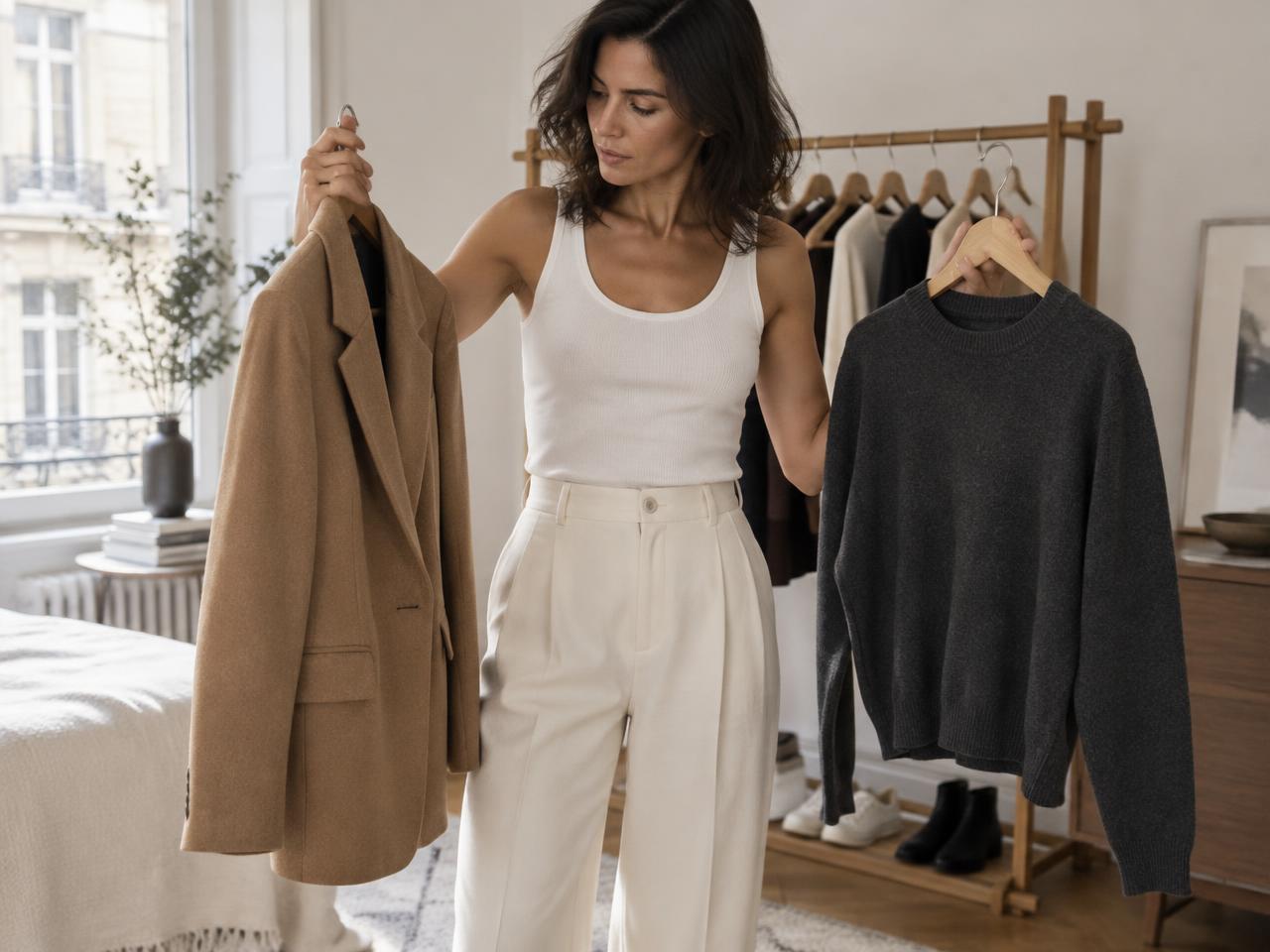
My background in education might seem completely unrelated to fashion.
I've come to see it differently.
Teaching taught me to listen, observe and recognize that what works for one person doesn't necessarily work for another.
Styling is surprisingly similar.
I can love a particular trend, but that doesn't mean it's right for every client.
One woman might need a wardrobe that takes her from a corporate office to evening events. Another might work from home, spend afternoons at children's activities and want clothes that can transition easily into dinner.
One might love color.
Another might feel most like herself in neutrals.
The job isn't to make all of those women dress the same.
The job is to understand each one well enough to help her make better choices.
That idea has stayed with me throughout my career.
“Personal style doesn't begin with fashion. It begins with understanding the person wearing the clothes.”
Interestingly, that's also become one of the principles behind how I think about technology.
Twenty years of styling became twenty years of research
I never thought of my styling career as "research."
Looking back, that's exactly what much of it was.
For more than two decades, I've had a front-row seat to the way women actually interact with fashion.
Not how we assume they shop. How they really shop.
I've watched clients save pictures of things they love.
I've watched them forget about something they wanted and then struggle to find it again.
I've watched them buy pieces without realizing they already owned something nearly identical.
I've seen clothes arrive that looked great online but didn't solve any real wardrobe need.
I've watched women own plenty of clothing but still feel as though they didn't have enough outfits.
And I've watched the opposite happen too.
Sometimes one carefully chosen purchase suddenly makes five things already hanging in the closet more useful.
Those experiences taught me something important:
“Women aren't necessarily struggling to find clothes. They're struggling to connect the pieces of the process.”
Discovery happens in one place. Shopping happens somewhere else. Things we want get saved in different places. Our actual clothes are hanging in a closet. Our outfit inspiration might be stored on our phones. Sale notifications arrive in our inboxes. And somehow we're expected to keep track of all of it.
Shopping got easier. The decision-making didn't.
The way women shop has changed dramatically during my career.
When I started styling clients, shopping was much more physical.
We went to stores. We tried things on. We walked from one retailer to another.
Today, fashion is everywhere.
A woman can see something on Instagram in the morning, find it online during lunch and have it on its way to her house before dinner.
That's incredibly convenient.
But convenience created another problem.
We made it easier to buy. We didn't necessarily make it easier to decide.
Do I really need this? Will I wear it? What would I wear it with? Do I already own something similar? Should I buy it now or wait for a sale? Where did I save that dress I liked last week?
These are technology problems, but they're also styling problems.
And that's where the idea became interesting to me.
The question that changed my direction
For years, the most valuable part of my work wasn't simply choosing clothes for someone.
It was remembering context.
When a client showed me a blouse, I wasn't looking at that blouse in isolation.
I was mentally seeing her wardrobe.
I knew she had the pants. I remembered the jacket. I knew which shoes she would actually wear. I knew whether the color worked for her. I knew she needed something for an upcoming event. Or I knew she already owned three versions of essentially the same thing.
That context changed the decision.
At some point, I started wondering:
“Could technology remember some of this context too? Could it help a woman keep track of the things she likes? Could it help connect what she's considering buying with what she already owns? Could it help her make a smarter purchase? Could it help her see more possibilities in the wardrobe she already has? Could technology bring some of the thinking behind personal styling to women who may never work individually with a stylist?”
I kept coming back to those questions.
Eventually, I realized I didn't just want to think about them.
I wanted to build something.
Becoming a founder meant becoming a beginner again
There's something humbling about starting over in a new industry after spending more than 20 years becoming an expert in another one.
I understand styling.
Software was different.
Suddenly there was an entirely new language to learn: product development, user experience, databases, APIs, artificial intelligence, development cycles and all of the decisions involved in turning an idea into something people can actually use.
There have been moments when I've thought, This would certainly be easier if I had just stayed in fashion.
But I've also realized that I didn't leave my expertise behind when I moved into technology.
I brought it with me.
I'm not trying to become a software engineer.
My role as a founder is to understand the problem we're solving, understand the woman we're solving it for and make sure the technology serves her rather than the other way around.
That's something 20+ years of styling prepared me to do.
Style To Cart grew out of a real problem
That thinking ultimately led to Style To Cart.
The idea wasn't born from asking, What kind of fashion app could we build?
It came from asking a different question:
“What would actually make shopping and getting dressed easier for women?”
Style To Cart is being built around the idea that the different parts of a woman's fashion life shouldn't feel so disconnected.
The things she discovers. The things she wants. The things she owns. The things she's waiting to buy. The outfits she wants to create.
They're all part of the same wardrobe story.
I believe technology has an opportunity to help connect them.
Not to tell every woman she should dress the same way. Not to replace personal taste. And not to remove the human element from personal style.
Quite the opposite.
“The technology should help make fashion feel more personal, not less.”
My advantage isn't that I come from technology
When you're entering a new industry, it's easy to focus on what you don't know.
I've learned to look at it differently.
My advantage as a founder isn't that I've spent 20 years building software.
“My advantage as a founder isn't that I've spent 20 years building software. It's that I've spent more than 20 years understanding the problem.”
I've stood beside women in fitting rooms. I've gone through their closets. I've seen what they buy and don't wear. I've seen what they wear until it practically falls apart. I've watched them struggle with trends. I've seen how one great purchase can completely change a wardrobe. And I've listened to thousands of small decisions and frustrations surrounding getting dressed.
That experience shapes every question I ask about the product we're building.
I don't start with what the technology can do. I start with what would make a woman's life easier.
I think that's an important distinction.
Fashion technology should still feel human
I'm excited by what artificial intelligence and other technologies can bring to fashion.
But I don't believe the future of personal style is an algorithm simply telling women what to wear.
Style is too personal for that.
What technology can do incredibly well is help us remember, organize, connect and surface possibilities.
It can potentially take information scattered across different places and make it useful.
The opportunity, in my view, isn't to automate personal style.
“The opportunity, in my view, isn't to automate personal style. It's to remove some of the friction surrounding it.”
Because ultimately, women aren't asking technology to make them fashionable.
They're trying to answer much simpler questions: What should I buy? What do I already have? What works together? And what should I wear?
Those questions haven't changed very much during my career.
The tools we can use to answer them have.
Sometimes the next career is hidden inside the one you already have
If you had told me when I was teaching elementary school that I would eventually become a wardrobe stylist, I probably wouldn't have believed you.
If you had told me when I started styling clients that I'd eventually become the founder of a software company, I definitely wouldn't have believed you.
But looking backward, the path makes more sense than it did while I was living it.
Education taught me to understand people.
Styling taught me to understand women and their wardrobes.
Entrepreneurship taught me to recognize problems and look for better ways to solve them.
And technology has given me an opportunity to take everything I've learned and think about how it could reach far beyond the women I can personally style.
I didn't set out to become a software founder.
I followed a problem I'd spent more than 20 years learning how to solve.
And that's what led me here.
Infographic
01
Two decades of standing in closets while women decided out loud.
02
The same five questions surfaced in nearly every session.
03
Those questions became the problems worth solving with software.
04
Style To Cart starts from the woman and her wardrobe — not the catalog.
Questions I Get Asked
- A fashion technology company in development, built around how women actually decide what to buy and what to wear. More on the founder page.
- Because the decision, not discovery, is the bottleneck. I understood the customer long before I began building the technology.
More From Me
- What I'm BuildingWhy Style To Cart started inside real closets.
- What fashion technology still gets wrong about women
- Media & Press
Sources & Further Reading
- The State of Fashion reportMcKinsey & Company
- The Business of Fashionbusinessoffashion.com
- American fashion industry resourcesCFDA

About Wendy
Wendy Pilch is an award-winning wardrobe stylist, fashion expert, entrepreneur and Founder & CEO of Style To Cart. For more than 20 years, she has helped women assess their wardrobes, shop strategically and develop personal style that works for their everyday lives. Her fashion expertise has been featured on ABC, NBC and Fox and in publications including The Washington Post and Modern Luxury. Today, Wendy is bringing her real-world styling experience to fashion technology.